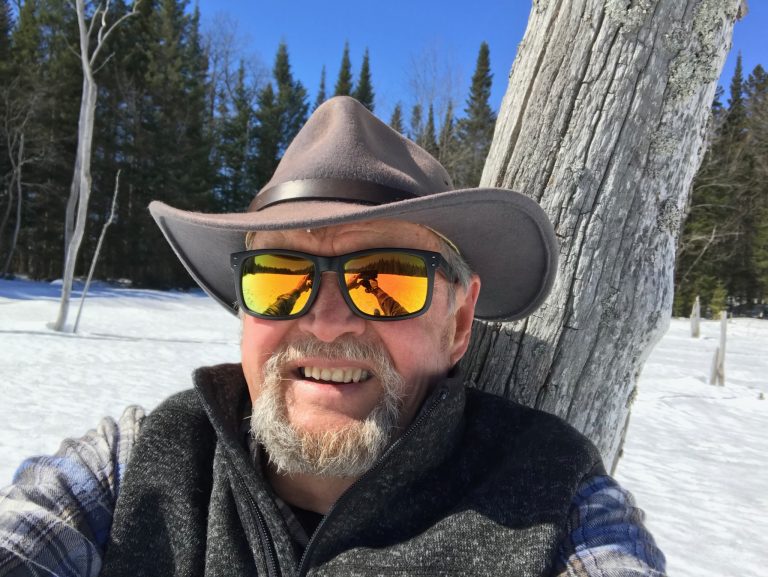

A Spiritual Passage Through an Extraordinary Life with Rand R. Timmerman, Esq | Ep. 66
On this week’s episode of The True North Show I am joined by Rand R. Timmerman, Esq an extraordinary man who has experienced extraordinary things throughout his life. Rand is definitely a story teller and I found myself hanging on every word he said through our conversation. Rand shares some deeply personal experiences throughout his lifetime and gives us the insights as to why he wrote his book. There is so much more we are going to explore when he comes back again next season, we really did only just scratch the surface!
Bio:
Rand R. Timmerman, Esq. is an Attorney, Author and Vietnam Veteran who grew up in a tiny village called Adams, New York a place he describes as having more cows than people and from those humble beginnings, he went on to live a life that reads like something straight out of a remarkable novel.
In March 1966, as just a young man, Rand enlisted in the United States Marine Corps and served with the 1st Marines in Vietnam, reaching the rank of Corporal and being temporarily promoted to Second Lieutenant in the field. After returning home, he went on to Officer Candidate School, the Basic School, and then JAG school before being honourably discharged as a First Lieutenant.
But Rand was just getting started. He went on to graduate summa cum laude from Syracuse Law School in 1975 and spent the next four decades building a distinguished legal career across five counties in upstate New York.
Since retiring in 2012, Rand has discovered yet another calling writing. His book A Spiritual Passage chronicles his extraordinary journey hiking the Appalachian Trail in 2018 and 2019 alongside his younger brother Ron, who was 71 years old at the time.
Beyond writing, Rand dedicates his time to alcoholic recovery programs, and is the proud husband, father of four daughters, and grandfather of seven grandchildren.
He is a man who has lived many lives and every single one of them has shaped him into the person he is today.
Purchase A Spiritual Passage: https://www.randtimmerman.com/a-spiritual-passage
Website: https://www.randtimmerman.com/
Transcript:
[00:34] Megan North:
Hello and welcome to the True North Show. I’m your host Megan North, and I’d like to start by thanking the sponsors of the show: Quantum Awakening, Beth Lewis, and Anne C. Clarke.
Today I am joined by Rand R. Timmerman Esquire, an attorney, author, Vietnam veteran, and one of the most extraordinary human beings I have had the privilege of welcoming to The True North Show. Rand grew up in a tiny village called Adams, New York, a place he describes as having more cows than people. And from those humble beginnings he went on to live a life that reads like something straight out of a remarkable novel.
In March 1966, as a young man, Rand enlisted in the United States Marine Corps and served with the first Marines in Vietnam, reaching the rank of corporal and being temporarily promoted to second lieutenant in the field. After returning home he went on to Officer Candidate School, the basic school, and then JAG School, before being honourably discharged as a first lieutenant.
But Rand was just getting started. He went on to graduate summa cum laude from Syracuse Law School in 1975 and spent the next four decades building a distinguished legal career across five counties in upstate New York. Since retiring in 2012, Rand has discovered yet another calling, which is writing. His book A Spiritual Passage chronicles his extraordinary journey hiking the Appalachian Trail in 2018 and 2019 alongside his younger brother Ron, who was seventy-one years old at the time.
Beyond writing, Rand dedicates his time to alcoholic recovery programmes and is the proud husband, father of four daughters, and grandfather of seven grandchildren. He is a man who has lived many lives, and every single one of them has shaped him into the person sitting with me today.
Rand, welcome to the show.
[03:05] Rand R. Timmerman Esq:
Thank you, Megan. That’s a very extensive biography.
[03:09] Megan North:
It is. Well, it’s what you gave me. It’s really interesting, isn’t it, listening to someone else read it out?
[03:17] Rand R. Timmerman Esq:
It is. You know, eighty years is a long time. It’s amazing. My life has been a wild ride.
[03:27] Megan North:
Definitely, definitely. Rand grew up in a village with more cows than people, went to Vietnam as a young man, came home and built a four-decade legal career, and then in his seventies laced up his boots and hiked the Appalachian Trail alongside his brother. Stay with us because when we come back, Rand is going to take us through a life so full of courage, reinvention, and purpose that I guarantee it is going to leave every single one of you inspired.
Welcome back to the True North Show. I’m here with Rand R. Timmerman Esquire. And this is one of those conversations that reminds you what it truly means to live a full and purposeful life.
So Rand, when I was reading your bio, it mentioned that you attended university for three semesters and then you joined the Marines. Was this a defining true north moment or was it out of necessity that you joined?
[05:14] Rand R. Timmerman Esq:
No, it was a true north moment for sure. Actually, I got drunk.
I was in college. I came from a very poor family. I mean, really poor. I went to bed hungry. I wore clothes that other people had worn out and shoes with holes in them for quite a few years. It was a very rural county. I worked on farms and all that sort of thing. I didn’t know what I wanted to be when I grew up.
I was lucky that I had a pretty good brain. God gave me a good brain. But I had no clue. I got drunk the first time at thirteen years old and it was a wild ride. I found a bottle of Jim Beam in the basement. I had been invited to this party, my first real party, the first time anyone had ever invited me. We were playing hide and seek and I found this bottle of Jim Beam in the basement of this house with my friend, so we kind of went off to the side.
Megan, I took that first mouthful and I went: how can anybody drink this stuff? And then it was like a cape went right over my body. This warmth. And I went from five foot eight to six foot four and I was handsome and I didn’t have acne and I was smart and I was sexy and I was funny. I just became something that I wanted to be. It was transformative. Alcohol is Latin for spirit. Spiritus is Latin for alcohol. I had found my God.
[06:58] Megan North:
Mm.
[07:00] Rand R. Timmerman Esq:
I had to call home because I couldn’t walk after we got done. But I knew I had an affinity for alcohol at a young age.
And it was kind of a godsend in a way, Megan, because the next day when I confronted my father and admitted what happened, he told me my friend was in the hospital and I hadn’t even gotten sick. But I knew it was probably going to be a problem. And I made a conscious decision to never do drugs. I never did drugs. I never smoked marijuana. I never did any of that. Why would I? I had found the perfect elixir.
So I went off to college at SUNY, State University of New York. I was a pretty good student but I was working as a janitor from midnight to eight, Monday through Friday, cleaning toilets. And then I was a pin setter in a bowling alley when they still didn’t have automatic pin setters. Selling Amway products on the weekend. And I had no money.
So I changed my major every semester. The third semester I changed it to psychology because I had an awareness that I was a nut job. I just could not figure out what I wanted to be. And I really didn’t like being a janitor.
So I got drunk one night in a bar. I would only go into a bar about once a month, save up my change. The next morning when the owner came in, I’m lying on the pool table. I’m the only one in there. He turned the radio on, started cleaning up, never said a word to me. I’m lying on the pool table. And then on the radio, the announcer is talking about the first Marine Division going into Vietnam. Body counts and stuff like that. And for whatever reason, I just thought. I was a patriotic kid. I was involved in Boy Scouts. I was an Eagle Scout. I was a vigil member and a member of the Order of the Arrow, which is the very highest level of scouting. My dad was a Mustang pilot in World War Two. He came home, had me and my brother, and then he got polio.
My first memory, Megan, of things you can actually remember, is Christmas Day. So it would have been in 1950. We got a tree with a couple of bulbs on it.
[09:35] Megan North:
Mm.
[09:35] Rand R. Timmerman Esq:
And my little sister is standing there, my dad is standing there on his crutches, my mum is there, and my little sister is crying. She cried the whole day because she wanted a doll. The only thing under the tree was a pedal wagon that my father had gotten from the dump, because he was at the dump all the time getting stuff and fixing it up. He had taken it home, sanded it, painted it, made it look like new. We had that pedal wagon forever. Wish I had it now.
[10:05] Megan North:
I think that is
[10:09] Rand R. Timmerman Esq:
And I just remember thinking: why are we being punished? Why is my dad crippled? Why are we so poor in a community where everybody was kind of poor in those days? I don’t know. I had a pretty good childhood. My parents did the very best they absolutely could and I learned a lot and I became pretty independent and hardworking at a very young age. At twelve years old I was driving tractors and spreading manure. I could just walk across the street, walk into a barn, and say: you got anything for me to do? Yeah, here’s a quarter, go take care of the commodore.
[10:45] Megan North:
Yeah, yeah.
[10:46] Rand R. Timmerman Esq:
So anyway. And then a month later I’m in the war memorial in Syracuse, New York, with my hand up saying I’m going to defend my country against enemies, foreign and domestic. And nine months later I’m in a rice paddy going: what did I do that for?
[11:04] Megan North:
Yeah. Yeah.
[11:05] Rand R. Timmerman Esq:
Kind of like that.
[11:07] Megan North:
Hmm. And I love that you made that point too, that you had always been patriotic. So when I asked you about the true north calling, you were so firm and confident saying yes. And I get the feeling that the structure of the Marines was probably something that called you to it as well.
[11:43] Rand R. Timmerman Esq:
Yeah, I took to it pretty well. I was a conscientious kid. I liked doing things well, to the best of my ability. I had a really hard engine. My heart, I don’t know. I can go all day. I only sleep four or five hours a night, even then in the Marine Corps. So we would go to bed at ten, taps at ten, reveille at three in the morning. And by the time the sun came up we felt like we had already worked today. And I’m like: we’re good.
[12:21] Megan North:
Yeah, yeah. My husband is ex-Navy, Australian Navy. He is very good at falling asleep the moment he goes to bed and the second the alarm goes off he’s up. He still sometimes says feet on deck as soon as the alarm goes off. I think that training is incredible.
[12:41] Rand R. Timmerman Esq:
Yeah, yeah. I still do exercises. I still walk six or seven miles a day.
[12:46] Megan North:
Yeah, yeah.
[12:48] Rand R. Timmerman Esq:
God gave me a pretty hardy body too. I didn’t realise it at the time. I was not very much of a spiritual man, but my brother Ron was. And later on, when I had my alcoholic battles, I definitely had to change course.
[13:03] Megan North:
Mm, yeah. So once you left the Marines and went back to university and became a lawyer, what was it about the law that kept you in that career for forty years?
[13:17] Rand R. Timmerman Esq:
Well, in the Marine Corps I had no idea what I was going to do. So when I finished up, when I came back from Vietnam, I was a corporal again. But I had been given the opportunity to go to Officer Candidate School and become a second lieutenant. And I thought: yeah, I’ll do that. I knew there was a good chance, being a combat veteran, that I would go back and be leading troops or be a forward observer or something.
I had been a machine gunner on a helicopter for a while and that was kind of a crazy ride. And I decided when I finished my officer training to go to aviation. I actually wanted to be a helicopter pilot, but my eyes were not good enough. So that only lasted a week.
I would have ended up as a forward observer, except when I checked in at my first duty station at First Marine Aircraft Wing in Cherry Point, South Carolina, one of my drill instructors from Paris Island was the captain of the day. I had run into him in Vietnam. He had been a gunnery sergeant. Then I ran into him again as a Mustang second lieutenant. Then a first lieutenant. And now he was a captain at Cherry Point. I thought: this is like Forrest Gump.
I got there on a Sunday. He goes: I’ve got all these schools. You want to go to a school? I said: I don’t know, what have you got? He is rattling them off and he goes: Newport, Rhode Island. I said: what’s that? He goes: that’s JAG School, Judge Advocate General. It’s for legal officers in the Marine Corps.
I said honestly: I’ve never been to Newport, Rhode Island. Two days later the orders were typed and I was checking in at the JAG School. I’m the only second lieutenant. All the other officers are captains. They have all got a college degree, all got their law degree. Some have passed the bar.
[15:51] Megan North:
Yeah.
[15:53] Rand R. Timmerman Esq:
We twenty of us had a mansion on the ocean. It was the off season. We each had our own room and these guys were kind of partying because they had been through the grinder with school and everything. And I thought: hmm, I’m going to focus on this school and do the best I can.
I knew a little bit about the Uniform Code of Military Justice, the UCMJ, Article 32 and all that. We had been trained as enlisted men: if you screw up, here’s what is going to happen.
[16:22] Megan North:
Yeah, okay.
[16:26] Rand R. Timmerman Esq:
Well, I don’t remember if it was a twelve-week course or six weeks. But when we got done, I was the class honour man.
[16:35] Megan North:
Mm.
[16:37] Rand R. Timmerman Esq:
I’m telling you, they were all upset. How did this kid, younger than they are, without a college education, end up being the honour man? It was good, though. So I went back to Cherry Point and started being a lawyer. They made me a defence attorney, essentially. And I got a couple of acquittals. One was for sleeping on post, which in the Marine Corps meant Fort Leavenworth, two years in prison, dishonourable discharge. I worked hard at it and it came together. But then they solved that problem by making me a prosecutor.
[17:42] Megan North:
Yeah.
[17:43] Rand R. Timmerman Esq:
And then every time I was getting close to going to Vietnam, I would end up down in Puerto Rico at Roosevelt Roads, which is a Navy base. Your husband probably knows it. They would send me down there for a month or two to handle all the Article 32 cases for the Marines that got into trouble there. And when I came back, I was no longer at the top of the list to go to Vietnam.
The second time that happened, I mentioned it to my buddy, the captain. And he goes: Rand, why do you think I keep sending you down to Puerto Rico? I said: you’re sending me down? He said: yes. Because if you go back to Vietnam, you will get killed. You have used up all your angel points.
[18:47] Megan North:
Mm.
[18:48] Rand R. Timmerman Esq:
So I had a guardian angel in the Marine Corps. Can you imagine?
[18:52] Megan North:
That’s just beautiful.
[18:55] Rand R. Timmerman Esq:
Yeah, I never saw him again after I left. By then I was married, had one child and another on the way. But anyway, to answer your question, the long version is: I knew that was what I wanted to do.
[19:09] Megan North:
Yeah, and I love that when you tell that story, like you said yourself, it was another true north moment. There was something in you that just knew. You probably didn’t know it at the time because you were very young. But that opportunity was not going to come along again. And I love that you had this fantastic instinct to really make the best of it.
[19:55] Rand R. Timmerman Esq:
Yeah, I knew it was a once in a lifetime thing.
[19:57] Megan North:
Yeah.
[19:58] Rand R. Timmerman Esq:
And I knew I liked it. I knew it was going to be hard. I actually joined Toastmasters while I was in the Marine Corps because once I became an officer I was at a different level and I was not a good public speaker. I mean, I was just a shy country bumpkin kid.
[20:17] Megan North:
Yeah. Yeah.
[20:18] Rand R. Timmerman Esq:
So now I am trying to play with the big boys and I do not have the toolbox. So I joined Toastmasters. And now I’m speaking in front of big groups of people who are not all military. That helped me. I knew what I needed to do. And I was happy to do it because, my God, for a kid like me, it was this amazing opportunity.
[20:44] Megan North:
Yeah, amazing. So given all of the experiences you have had, both in the Marines and over your career, how have you seen mental health and the importance of it change over time?
[21:01] Rand R. Timmerman Esq:
Wow. Mental health. That’s a really great question, Megan. Because when I came back from Vietnam, I was in the northern part of Vietnam. We were right below the DMZ. I was up near Khe Sanh. I was looking over the DMZ quite a few times.
You know, you never have your firearm more than arm’s length away. Grenades, the claymore, the whole nine yards. And you do that for thirteen months and you never know what’s going to happen. And sometimes really bad things happen. And then all of a sudden you get home.
And I remember a few days had gone by and I thought: I seem to be adjusting. What happened to me, and I think it happened to a lot of Vietnam vets, was that I was so busy. I went right back into training. The best thing I could ever have done. Because the whole thirty days I was on leave I met the mother of my children.
When we got married we figured out we had only been together physically with each other for thirty days total.
[22:23] Megan North:
Wow.
[22:25] Rand R. Timmerman Esq:
But we hit it off and it was kind of a storybook thing. She ended up being an alcoholic and died from the disease, unfortunately.
[22:36] Megan North:
I’m sorry.
[22:37] Rand R. Timmerman Esq:
Yeah. But while I was in law school I started having these really bad nightmares.
Terrible. Unbelievable. The first time it happened, I thought I was in a battle in Vietnam and I thought I had been sliced open with a bayonet because I had been in a situation where we ran out of ammo. It was so real. I could smell the gunpowder, I could smell the flashbangs and the whole nine yards. And then all of a sudden I am bathed in white light and I look and my wife is lying on the floor, Megan.
She had crawled over and flipped on the light switch. And I’m sitting in bed, not covered in blood, but covered in sweat. Soaking wet. But I am smelling gore because I have voided myself and filled the bed.
[23:33] Megan North:
Right.
[23:33] Rand R. Timmerman Esq:
My wife and I both looked at each other and we knew this
[23:37] Megan North:
Mm.
[23:38] Rand R. Timmerman Esq:
was not good. This was going to be a problem.
[23:41] Megan North:
Yeah. Yeah.
[23:43] Rand R. Timmerman Esq:
And in those days there was no support. It was suck it up, move on.
When I was on leave that first time before I went into the officer training, I was with my dad one day going out to the airport because he had an airplane he had bought for five hundred dollars. And I started telling him a little bit about one of my adventures in Vietnam. He told me not to ever talk about it. You don’t hear me talk about it. You don’t hear your uncles talk about it. We don’t talk about this stuff. You put it in the back of your brain, you don’t ever think about it again. You just move on because you are okay and you are home.
And for whatever reason, I did what he told me.
[24:29] Megan North:
Yeah. Yeah.
[24:31] Rand R. Timmerman Esq:
And so all that garbage was stuck in my head. And sometimes it wanted to come out. And I started using alcohol to medicate myself from time to time. I tried to do the right thing, you know, eighteen hours of the day. And then I would just go to bed. Like your husband, my wife would say: I don’t know how you do that, you’re snoring before your head hits the pillow.
[25:02] Megan North:
Yes.
[25:04] Rand R. Timmerman Esq:
And then I would fly out of bed about two minutes before the alarm was going to go off anyway. An hour later it was five-thirty in the morning and I was in my office working.
[25:16] Megan North:
Yeah. And so what about now for your mental health? Is there anything that helps you when you’re getting in your head? You mentioned that you walk a lot, so I would suspect exercise and movement would be a great help.
[25:39] Rand R. Timmerman Esq:
Yeah. The Marine Corps was very much: you get up in the morning, you do PT first thing, usually before daylight. And like we talked about the sleep. I don’t know. I got into a daily routine. I ran every day until I couldn’t run anymore. I did twenty-six marathons. I did cross-country ski races in the wintertime with my brother and the guys we hung out with.
And I always thought: well, if I can run thirty miles, I can drink as much as I want. I had that kind of mindset.
[26:30] Megan North:
Yeah.
[26:30] Rand R. Timmerman Esq:
I worked really hard and I was very successful for the most part. I had relationship problems. I have been divorced three times and married four. So there were aspects of my life that were rough. I always thought I would be married to the same woman forever, but that did not work.
So to answer your question, I just coped. My dad coped with being paralysed from the waist down from the age of twenty-seven. With that we were taught: you just deal with whatever God or whatever is handed to you and you cope. You make it work somehow.
[27:10] Megan North:
Yeah. Yeah. Yeah.
[27:12] Rand R. Timmerman Esq:
But then, to be honest, in my early sixties, the alcohol escalated. The wives were gone. The kids were gone. I was alone a lot. And if you are a real alcoholic, you metabolise alcohol differently than normal people. Your body goes through this chemical process. I knew I had an affinity for alcohol that my friends didn’t have. I could drink copious amounts and it didn’t seem to bother me. I almost never got sick.
But in the end, if you metabolise alcohol differently, that acetone kicks in and you are in trouble. And I got to that point.
[28:00] Megan North:
Yeah.
[28:01] Rand R. Timmerman Esq:
I started going into a treatment programme, but it was based on spiritual principles and I didn’t like that too much. But I kept hanging around. And then I had another true north moment. It really did change my life forever and it solved my problem.
[28:23] Megan North:
Mm. And is it with your brother, like you hiking the Appalachian Trail?
[28:28] Rand R. Timmerman Esq:
No. No, it was before that. I would never have been able to do the trail otherwise. What happened was I went into a programme for alcoholics who like to remain anonymous. I have to honour that, which is why I’m saying it this way. I don’t want to cross over any line around being a recovered alcoholic. Because if I did that and then relapsed at some point, which I don’t think is ever going to happen, I would be hurting the programme. So that’s why we have that precedent.
[29:03] Megan North:
Yep. Yep.
[29:04] Rand R. Timmerman Esq:
What happened to me was it got so bad at the end. My refusal to do the God thing. I went to meetings. I probably did two thousand meetings before I stopped relapsing. On my last drunk, I just wanted to die.
[29:19] Megan North:
Mm.
[29:20] Rand R. Timmerman Esq:
I was in the hospital a couple of times after bouts where I was on a suicide watch. I mean it got really, really bad. And then I would stop. Just by my willpower, I could stay sober for a while. But the real disease is going to get you in the end. And that’s what happened to me. I just wanted to die. For a while I thought it was a moral problem. Why can I do all this other stuff and I can’t stop drinking?
[30:00] Megan North:
Yeah.
[30:01] Rand R. Timmerman Esq:
Like: I’m so bad I can’t even recover from this programme. Well, what happened was I went on a really bad tear. I just wanted to die. But the problem was it was Saturday morning. I had been drinking cherry vodka for like five or six days. Drink, pass out, come to, drink again. I call them air vodka vacations. They weren’t a vacation, trust me. It’s like crawling through a hundred miles of broken glass. And so it’s Saturday morning and I cannot even pass out anymore. You get to a point where it’s very hard to explain. But I either was going to die or something miraculous was going to have to happen. And I wasn’t thinking about anything miraculous.
So I went and sat on this guy’s front steps because it was seven o’clock in the morning in Syracuse, New York and the liquor stores don’t open until nine. And I’m sitting there.
A man by the name, and I can say his name now because he has gone, Billy Cook, walked out. He was going to go fishing. He saw me, put his fishing poles down, came over, looked at me, sat down, and said: I know you. I’m just like you. What do you want to do? What’s your name? What do you want to do?
And I said: I just want to die.
[31:35] Megan North:
Mm.
[31:35] Rand R. Timmerman Esq:
I just want to die. I can’t live like this anymore. He said: well, I’ll take you to the hospital.
I said: all right, you can take me to the VA, I guess, because I had been locked up there for a week after one of my bouts in the psychiatric ward because of suicidal ideation. But he took me to another hospital and he went in with me. He sat by me at the emergency room and I am on the gurney all day long with tubes in my arms and he is sitting in a chair telling me his story about coming into this programme for alcoholics thirty years before.
[32:15] Megan North:
Right.
[32:16] Rand R. Timmerman Esq:
He didn’t believe in God either.
[32:18] Megan North:
Right.
[32:20] Rand R. Timmerman Esq:
So at the end of that day, he and I had created a bond of some kind.
[32:27] Megan North:
Mm.
[32:28] Rand R. Timmerman Esq:
He came and saw me every day I was in detox. And then like five days later he got me out of detox and took me to our first meeting together. We sat there and he looked at me and he looked at the door, because I’m sitting there thinking: what am I going to do now? I’ll read the big book again, where the steps are explained. I’ll go to three meetings a day. I’ll start going to the gym. I’m going to do the same stuff I’ve done every time. That’s what I’m thinking.
And Billy looks at me and goes: Rand, if I could have changed myself, I never would have walked through that door thirty years ago. He had been in the programme thirty years and helped many hundreds of men.
[33:06] Megan North:
Hmm.
[33:07] Rand R. Timmerman Esq:
And I just thought: my God. Okay. I’ll do whatever you tell me to do. Obviously I don’t have a clue.
[33:13] Megan North:
Yeah.
[33:14] Rand R. Timmerman Esq:
I know a lot. I have read everything. I went to rehab. I have done everything. But I don’t know how to be a sober man.
[33:21] Megan North:
Yeah. Yep.
[33:23] Rand R. Timmerman Esq:
So then we got out of that meeting that night and after everybody left, Billy looks at me and he goes: Rand, you need to pray to that God you don’t believe in. I had told him all about my disdain for any kind of godly whatever.
[33:37] Megan North:
Yeah.
[33:38] Rand R. Timmerman Esq:
And I started to balk a little bit and he said: or you will get drunk again.
[33:43] Megan North:
Right.
[33:46] Rand R. Timmerman Esq:
And something inside me, like a glass vase, just broke.
[33:52] Megan North:
Yeah.
[33:54] Rand R. Timmerman Esq:
And I started crying.
[33:55] Megan North:
Yeah.
[33:56] Rand R. Timmerman Esq:
I said: Billy, I don’t know how to pray. I have no idea.
[34:01] Megan North:
Mm.
[34:02] Rand R. Timmerman Esq:
We did what we call the third step prayer that night in the car park, on our knees. He said: I want you to say it every morning, first thing. It is only three sentences and you’ve got a good brain when it is not full of booze. Memorise it.
And then he said: I want you to do three other things every morning. Ask God to help you not drink today. Ask him to help you not think about drinking, because that is all you do. And third, to smash the idea that you have to drink again, because you don’t.
[34:34] Megan North:
Yeah.
[34:35] Rand R. Timmerman Esq:
And I have been doing that every morning since that day. And now I have almost twelve and a half years of sobriety.
[34:44] Megan North:
It’s beautiful.
[34:45] Rand R. Timmerman Esq:
I had to do a whole bunch of other stuff. He and I went to meetings every day together that first year. I had to read literature. Right after I had finished the twelve steps, I definitely had a connection with a higher power. This was not a cakewalk. I was on what they call the Pink Cloud for a little while, but in reality it was a struggle.
I had two episodes where I wanted to drink so badly. The first time I heard Billy’s voice in my head going: get on your knees. I had the keys, I was going out the door to get the bottle. And I went into my living room, got on my knees, and I prayed.
[35:22] Megan North:
Yeah.
[35:23] Rand R. Timmerman Esq:
Please don’t let me do this again. And when I got up, it was gone. It was the first time in my adult life that every cell in my body had been screaming come on, and I didn’t drink.
[35:55] Megan North:
Yeah.
[35:58] Rand R. Timmerman Esq:
And I called Billy. I said: Billy, you won’t believe what happened. He said: yeah, Mister, I will. Tell me about it.
[36:06] Megan North:
Yeah, yeah.
[36:08] Rand R. Timmerman Esq:
And it happened three months later again. That time was a little harder. I had a discussion with God. I felt like a piece of bait on a hook, being tested to see what I was really made of. But I didn’t feel like I was going to drink again. And yeah, anyway.
And then here is another true north moment. I didn’t even think about this until you started using that term.
[36:46] Megan North:
Yeah, yeah.
[36:47] Rand R. Timmerman Esq:
So a year goes by. I had retired because I didn’t want to destroy my legal career and reputation. I had retired in the middle of my relapsing. So I had been not working for a while, doing the programme, two or three hours a day, being with people who were sober, doing sober things, working on my family life and running and hiking.
At around thirteen months sober, the longest ever in my adult life, a young guy comes up to me and says: will you be my sponsor? Because Billy was my sponsor. And my brain is exploding: you’re not ready.
[37:38] Megan North:
Very interesting.
[37:40] Rand R. Timmerman Esq:
Yeah. So I said: look, come back tomorrow. Because that’s what Billy used to do. Billy would always say: come back for the next meeting tomorrow and then we’ll talk about it. Because ninety percent of the time they go home and think: maybe I overreacted.
[38:02] Megan North:
Yeah.
[38:03] Rand R. Timmerman Esq:
For him it was a way of filtering out the ones who were not serious about recovery. For me it was more like: I’m not ready. So I needed time to go talk to Billy.
I told him what happened. And he said: great, Mister. Go for it. And I said: Billy, you’re supposed to tell me I’m not ready, because I’m not ready. And he said, very seriously: Rand, you’re ready. You’ve got a lot of bad experience. And now you’ve got well over a year of good experience. I’ll help you. It’ll be fine.
[38:42] Megan North:
Talk about putting it into perspective.
[38:45] Rand R. Timmerman Esq:
And the first couple of guys it didn’t work out for. But a sponsor is basically a vessel where your higher power works through you with your experience, knowledge, and wisdom to help other people. And a lot of them do make it, but not all.
And since then, Megan, I have never not had somebody I was working with, pretty much on a daily basis. Even when I was hiking the trail, I had two guys calling me every morning. I would turn my phone on and I would usually be at the top of a mountain.
[39:25] Megan North:
Yeah, yeah. So let’s talk about that. In 2018, while in your seventies, you decided to hike the Appalachian Trail with your brother Ron, who was seventy-one. Most people at that age are slowing down. What on earth possessed you to do this? And whose idea was it?
[39:47] Rand R. Timmerman Esq:
It was God’s. I swear.
So Ronnie was in Vietnam at the same time I was. He was a machine gunner on a helicopter for a period of time. He was in the army and in the southern part of Vietnam. I did see him once there. I actually got leave in Vietnam to go see my brother and ended up being a machine gunner on an army helicopter for the week I was there to see him.
When Ronnie came back, he wanted to be a commercial pilot because our dad had been a pilot. And he met our mother’s best friend’s new best friend, Edie, who was fourteen years older than Ronnie. And Megan, on their first date, Edie showed up with the three youngest of her seven children.
[40:43] Megan North:
Ha.
[40:45] Rand R. Timmerman Esq:
No lie. When my brother and I did the trail, Edie had passed. Ronnie had the seven stepchildren, they never had any of their own. Twenty-seven grandchildren and twenty-seven great-grandchildren. And now it’s thirty great-grandchildren and more on the way. They got involved in the Mormon church. Some of the kids took to it too, and in that church they tend to marry young.
So Ronnie and Edie actually ended up moving to Utah. He was a bishop in the church and he flew commercial planes, mostly freight. He loved Edie deeply. They did a lot of hiking out in Utah.
They would come east because some of the kids had stayed there, and we would see him once or twice a year, usually at a cottage they rented on Lake Ontario. My younger brother Marty and I would go there and we would have a few beers and start making fun of Ronnie because he was a bishop in the Mormon church and he was not drinking. But we always got along fine. Everybody was fine with whatever anyone wanted to do.
And then when Edie had a massive stroke in 2011 and was put in a wheelchair.
[42:29] Megan North:
Mm.
[42:30] Rand R. Timmerman Esq:
She never got better. For seven years Ronnie took care of her night and day. Wouldn’t let anyone else. He was still running. He would put Edie in her wheelchair in front of the window of the house. Then he would go out for a run, come past the house, wave hi honey.
[42:58] Megan North:
That’s lovely.
[43:00] Rand R. Timmerman Esq:
Yeah. And when she passed, he was there of course. It was the middle of the night. I called him right after she passed and he was not all right. He thought he would be fine. And I asked him once, when we were on the hike, if he had ever lost his faith in God. He said no, but it was tested a few times. The emotional grief of the loss of Edie was so overwhelming for him that he decided to hike the Appalachian Trail just to replace, with enough physical pain, what he was feeling. And he knew he had the grit and determination to do it if he was going to do it.
[43:54] Megan North:
Yeah.
[43:55] Rand R. Timmerman Esq:
He told me that on the phone. I said: well, I’ll come out. And then we were hiking in the desert out there. He brought it up again. And I said: well, what are you going to do, bro? How are you going to hike the Appalachian Trail? He goes: I’ve already got the maps. He had the maps, he had the gear, he was buying equipment. He said: this is January 2018. I’m going to take a bus to Springer Mountain, Georgia and walk the Appalachian Trail to Katahdin Mountain in Maine.
The Appalachian Trail is now almost twenty-two hundred miles long.
[44:38] Megan North:
Twenty-two hundred.
[44:40] Rand R. Timmerman Esq:
Twenty-two hundred miles long. It goes through fourteen states. It goes over six hundred mountains. It goes up and down four hundred and sixty-five thousand feet. So that’s close to half a million feet of elevation change.
There is a picture of my brother standing on Blue Mountain on the north side of the Lehigh River in the middle of Pennsylvania. It looks like he is flying because it is the highest cliff on the Appalachian Trail. It is in the book. It is my favourite picture of him. He had just, and here is the kind of man my brother is, when he hiked up that mountain there were two women who had got about halfway up and frozen. They could not move. They could not go down, they could not go up. So when Ronnie got to them, he took their packs, one at a time, up to the top. Then he went down and got the women, one at a time, and took them up.
That is just who my brother is. Without any doubt, this is what I am going to do.
[45:51] Megan North:
Yeah. Wow.
[45:54] Rand R. Timmerman Esq:
Anyway, it was his idea. It is all his fault.
[46:01] Megan North:
And then the book, A Spiritual Passage. Was it something forming in your mind as you were doing the trail, or did it come about when you got back?
[46:15] Rand R. Timmerman Esq:
It came about when I got back. I had no idea I was going to write a book.
But Ronnie did not take many pictures. He was more just marching. I’m going to do this.
[49:00] Megan North:
Yeah.
[49:01] Rand R. Timmerman Esq:
After a couple of weeks, I decided I was not going to look at the maps anymore. I was not going to look at elevation changes. I was not going to try to picture what it was going to look like. I decided to pretend it was like 1970. This is a whole new thing, not very many people are doing it. I am just going to walk this trail and whatever unfolds, unfolds.
I would think: I am never going to step in this place again. So I am going to look around and pay attention to what is here. What has my God created that I am going to see today? And I would go around a corner and take a picture. I was taking thirty, forty, fifty pictures a day.
Ronnie and I both kept journals. My journals were more about funny things that happened, because a lot of funny things happened, and about trail names. Everybody on the trail has a trail name. I would memorise them as I met people. My trail name was Rambo. Ronnie’s were more about: we were here, we went over this mountain and this mountain. He’s a pilot. That is how they think.
[50:20] Megan North:
Yeah, of course.
[50:21] Rand R. Timmerman Esq:
So when I got all done, I had all these pictures, and I thought: this is kind of neat. We’re one-offs for sure. And I was thinking about Ronnie’s huge family. He sends cards two or three times a week, birthday cards, graduation cards, weddings. He puts five dollars in every card because he cannot afford more. He makes piggy banks for the little kids out of wood. So anyway, I decided I want them to know what we did. This is amazing.
So I decided to do the book. I published the first version and it has got five hundred pictures in it. It describes what we did on a daily basis. So somebody, Megan, who is elderly and sitting at home and wishes they had done the Appalachian Trail, can take the book and follow along. This is where they were, this is where they went. There are pictures of maps. They can see what it looked like every day on a daily basis.
And then I thought: my recovery from alcoholism might help people if I put it in there. So I put it in and called it A Spiritual Passage. And Ronnie had some things that happened on the trail that were just godly. They were just miracles. And it just gave him peace and serenity that he did not expect.
[52:02] Megan North:
Hmm. Beautiful. Wow. Rand, I don’t even know where to start. When we first met, I did say, didn’t I, that I was sure we could fill ten episodes. I feel like we have just scratched the surface.
[52:27] Rand R. Timmerman Esq:
Well, we have given it away.
[52:30] Megan North:
Yes, definitely. I have really enjoyed listening to just a small part of your life. I am really glad that we got to talk about the book as well. And I am just really grateful that I got to spend this time with you today. So thank you.
[52:48] Rand R. Timmerman Esq:
Well, thank you, Megan. This is a great opportunity and I hope your audience loves it. You have a great podcast. I watched some episodes. You are helping people too with your podcast. So that is wonderful.
[52:59] Megan North:
Yeah, thank you. And I would also like to thank all of my amazing and dedicated audience, my supporters, and again my sponsors who are amazing. I hope that everybody has an amazing rest of the week and I will see you all again next week. And again, thank you so much, Rand.
[53:16] Rand R. Timmerman Esq:
Thank you.