
Have You Met Your Inner Child? Beth Lewis on Healing, Wholeness, and the Patterns That Are Still Running Your Life
There is a version of you that formed before you had the language to describe what was happening to you.
Before you understood that the way adults spoke to you, the needs that were met and the ones that were not, the stories you absorbed and the conclusions you drew about yourself and the world, all of it was being stored. Not just in your memory. In your body. In your nervous system. In the patterns that show up, decades later, in your relationships, your finances, your health, and the quiet voice that tells you what you are and are not allowed to have.
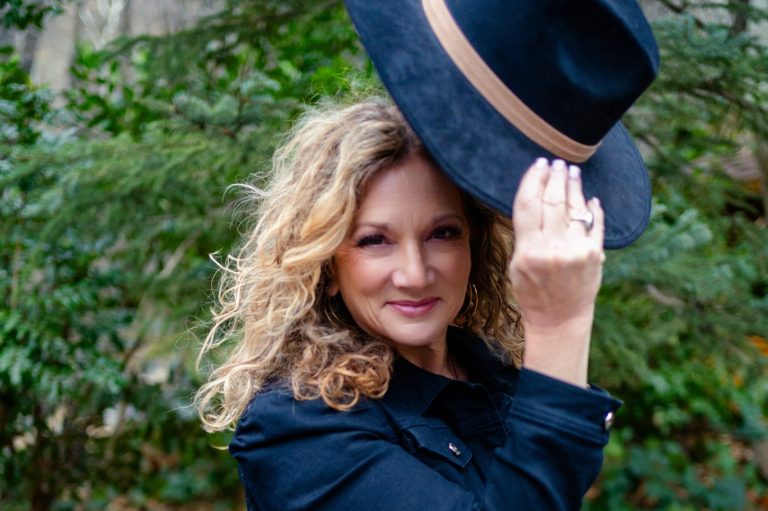
That version of you is what Beth Lewis calls the inner child. And her entire life’s work is about helping women meet that part of themselves, understand it, and finally begin to heal it.
Who Beth Lewis is and why this work found her
Beth is a holistic coach, mother, business owner, and someone who has walked through some of life’s most challenging terrain and come out the other side with a powerful toolkit and an unshakable commitment to helping others do the same. Through breathwork, sound healing, NLP, wellness coaching, and the science of psychoneuroimmunology, which explores the profound connection between the mind, the nervous system, and the body, she works with women to reduce cortisol, regulate the nervous system, and create transformation that is not only felt but measurable.
Her work is not theoretical. It is rooted in her own healing journey. And the depth of that personal experience is visible in the way she speaks: with precision, with warmth, and with the specific kind of humour that only comes from someone who has done the hard work and found lightness on the other side.
What the inner child actually is
There is a tendency for terms like inner child to feel either too vague or too heavy. Beth brings it back to something simple and immediately recognisable.
We were all children once. And we are still that person, in many ways. The beliefs we formed, the coping strategies we developed, the stories we told ourselves to make sense of things that were too big or too confusing or too painful at the time: all of it is still operating inside us as adults. Not in our conscious mind, necessarily. In the body. In our automatic responses. In the patterns we keep repeating without quite knowing why.
Inner child work is not about excavating every wound or spending years in the past. It is about identifying the patterns that are not serving you in your present life and understanding where they actually began.
Beth is also clear about something that tends to surprise people. You do not need to have had a traumatic childhood to benefit from this work. Some of her most powerful breakthroughs with clients have come from people who had what they describe as perfectly happy childhoods. Because even in happy childhoods, we absorb messages. We draw conclusions. We make meaning out of things in ways that a child’s brain is not equipped to process accurately.
One of her clients is a vivid example. This woman had been through genuine difficulty in her adult life, and when they began their work together she was convinced the source of her self-sabotage was rooted in those adult experiences. But as they went deeper, what they actually found was a handful of things said by a mean girl in the school playground when she was seven. Those words had formed her foundational beliefs about herself: that she was a freak, that she was ugly, that she did not belong. And those beliefs had been quietly running her adult life ever since.
It can be the most unexpected, seemingly small thing. And that is precisely why this work requires skill, patience, and a safe space to do it in.
The story you are telling yourself
One of the most practically useful frameworks Beth shares comes from Brene Brown, and it is one that can be applied immediately, in any relationship or situation.
When you feel triggered, before you react, pause and say: the story I am telling myself right now is this. Is that correct?
The reason this is so powerful is that our triggers are almost never about the present moment alone. They are about the past. They are about the inner child. They are about the old wound that has not yet been healed. And when we react from that place, we are not actually responding to the person or situation in front of us. We are responding to the child’s memory of a similar feeling.
Beth is also careful to note that having a truth does not mean the other person is wrong. Two people can look at the same situation through completely different filters and both be telling the truth as they experience it. The six drawn on a piece of paper is a six from one angle and a nine from another. Neither perception is incorrect. What changes is the willingness to turn the page and understand what the other person sees.
This is not about compromising. As Beth shares from a couples therapist she once worked with, compromise means giving something up, which can quietly build resentment over time. What actually creates a sustainable, respectful relationship is sitting with someone until both people genuinely feel heard and understood.
Silence, solitude, and the space where answers live
One of Beth’s most consistent messages is something deceptively simple: you never find the answer from the place you ask the question.
When we are overwhelmed, overstimulated, spinning in our own noise, and trying to figure out what to do, we are not in a state where real clarity can come. We need space first. Not more productivity. Not more scrolling. Space.
Beth practices what she calls pondering: twenty minutes, three times a week, sitting at her spot by the ocean, doing nothing in particular. Just being. She is honest about how uncomfortable those first sessions were. The to-do list kept arriving. The identity of being a single mum running a business kept insisting it needed her attention right now.
She sat with it anyway. And slowly, the silence became something she could rest inside rather than something she needed to fill.
The distinction she draws between being alone and being in solitude is an important one. Many people confuse the two. Being alone can feel like loneliness. Solitude is intentional and nourishing. It is choosing your own company and finding that it is actually good.
Beth says clearly: if the idea of spending twenty minutes alone in silence feels genuinely unbearable, that discomfort is not something to avoid. It is the work. It is the signal pointing directly toward the thing that needs attention.
Asking for help is not a burden
There is a moment in this conversation that cuts through everything else.
Beth shares that she had a habit, when going through a really difficult time, of retreating completely. Disappearing into herself. Not reaching out, not asking for help, because she did not want to be a burden.
A girlfriend eventually called her on it. After Beth had been through one of those private struggles, they met for dinner, and Beth mentioned what she had been going through. Her friend said: I want you to know that it would have been an honour to be there for you. Please do not take that away from me next time.
Beth wept. Because she had been so convinced that her pain was an inconvenience, a weight she needed to carry alone, that it had never occurred to her that the people who love her might actually want to be invited in.
This is a pattern that runs deep, particularly in women. The conditioning that says do not burden anyone, everyone has their own problems, I should have it more together before I reach out. But what Beth’s friend named in that moment was the truth: love wants to show up. Connection needs to be allowed. And when we carry our hardest things alone because we do not want to trouble anyone, we are actually depriving the people who love us of the opportunity to do something that matters to them.
She is also careful to draw a distinction here. Leaning on the people who love you is healthy and necessary. Expecting friends and family to be your perpetual therapist is not. If the same patterns keep surfacing, if the same crises keep happening, professional support is not a luxury. It is what makes genuine progress possible.
Boundaries, values, and two very different kinds of energy
Beth and Megan explore something in this conversation that is worth sitting with: the difference between setting a boundary from courage and setting one from confidence.
If saying no to someone requires courage, if there is bracing, rehearsing, dread, if you are already imagining the fallout, that is worth noticing. It tells you something about the dynamic in that relationship.
Confidence, on the other hand, is grounded. It says: this is what I need, this is where I stand, and I am genuinely prepared for whatever comes back. The relationship that holds space for that kind of boundary is built on real respect.
Beth connects this to values, which is where, in her experience, so much of the confusion around boundaries actually originates. When we do not know our own values, we cannot understand why certain things hit us so hard. We just know that they do.
For Beth, one of her highest values is respect. Once she understood that, so many of her old reactions made sense. She was not overreacting. She was responding to something that cut right to the core of who she was. She just had not had the language for it.
When we know what matters most to us, we know what is worth protecting. And we stop needing courage to protect it, because confidence has taken its place.
The retreat and what the women showed us
This episode was recorded in the warm aftermath of Megan and Beth’s first retreat together, and the women who attended are woven through everything they share. The exercises that landed. The moments of recognition. The tears that came not from pain but from the relief of finally being seen.
What became clear over that weekend is something both women have long believed but saw confirmed again in that room: this work is not niche. It is not for people who have been through extraordinary hardship. It is for every person who has ever wondered why they keep ending up in the same situations, why certain words land with an impact that does not quite match the moment, why some things are so much harder for them than for others.
The answer, almost always, leads somewhere in the past. To a child who was doing their best. To a moment that got stored wrong. To a story that was never quite true.
And the invitation, from both Megan and Beth, is simply this: go back and meet that child. With kindness, with curiosity, and with the understanding that it is never too late to give her what she needed then.