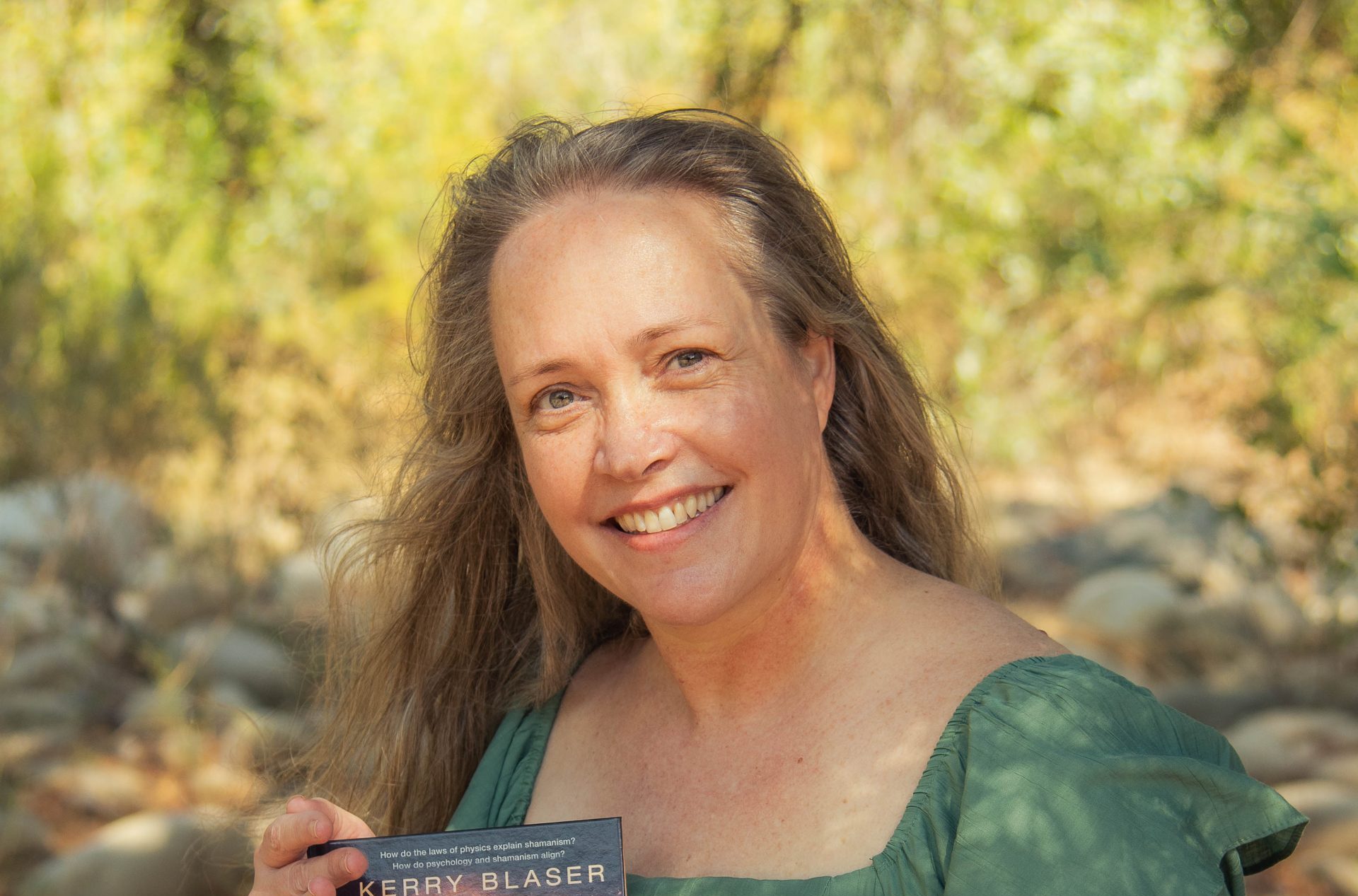
From Pain to Purpose: The Healing Journey of Kerry Blaser Bouzaglo
Some people share their story because it is interesting. Kerry Blaser Bouzaglo shares hers because it is medicine.
Kerry’s life has been shaped by contrast. Isolation and resilience. Loss and awakening. Trauma and insight. A long season of survival followed by a decade of deliberate, consistent inner work.
What makes Kerry’s story powerful is not the difficulty of what she has lived through. It is the clarity of what she has chosen to do with it.
She did not turn away from the hard stuff. She turned toward it, asked better questions, and kept going until the pain stopped being a prison and became a pathway.
Growing up in survival mode
Kerry grew up in a single-mother household in Southern California, carrying the weight of isolation and instability early in life. As a young person, she learned what many trauma survivors learn quickly: when the world does not feel safe, you build a version of yourself that can cope.
For Kerry, coping looked like pushing forward. Work. Achievement. Proving. Keeping busy. Holding everything together.
She poured her energy into academics and the structure of routine, including a formative six-year stint working at Hot Dog on a Stick. On the surface, it was just a job. Underneath, it was an entry point into something she needed more than she could name at the time: a sense of belonging, identity, and the beginning of self-reliance.
But survival strategies, even the impressive ones, come at a cost. When you spend years protecting yourself, your nervous system does not forget. It stores what you have not been able to process and waits.
A life built on capability
Kerry’s path took her deep into learning and cultural exploration. She studied Chinese and Religious Studies, then earned her master’s degree in East Asian Studies from UC Santa Barbara. In 1995, she married an Israeli man she met in Tibet. That same year, she began motherhood, eventually raising three children.
Her life carried achievement and complexity side by side. After her divorce in 2005, Kerry built a career in health insurance compliance, where her analytical mind and strong sense of integrity served her well.
In her corporate work, Kerry was known for seeing what others missed, asking questions others avoided, and walking directly into problems that needed a solution. She describes being able to “pull the darkest” issues to the surface, not out of drama, but out of truth.
That truth-seeking nature would later become a critical part of her healing journey.
The turning point: grief that became a gateway
In 2015, Kerry’s mother passed away on Kerry’s 45th birthday. That moment became a clear dividing line in her life.
Grief is often portrayed as only sadness. For Kerry, grief also became a doorway. A spiritual interruption. A message she could no longer ignore.
Kerry describes that moment as the beginning of a new chapter, one where she felt called to accept her intuitive abilities and confront the childhood trauma she had spent decades surviving around.
This was not a “love and light” awakening. It was real. Messy. Human. It demanded honesty.
And it required something Kerry had not been given a roadmap for: learning how to feel safe inside herself.
Healing that actually changes you
Kerry’s transformation was not built on one breakthrough session or a single spiritual experience. It was built on consistent inner work over years.
She sought support across disciplines, including shamans, psychologists, yogis, and medical experts. She did not choose one lane and dismiss the rest. She gathered tools, built self-awareness, and kept showing up for the work even when it challenged everything she believed about herself.
Kerry speaks about healing as a process of turning emotional pain into personal wisdom. Not bypassing it. Not polishing it. Not making it “pretty.” Transforming it.
A major theme in Kerry’s journey is the way relationships can mirror what is unresolved within us. She describes influential men in her life as “mirrors,” reflecting wounds back to her, and revealing what still needed healing.
This is not about blame. It is about insight.
When you stop seeing your pain as proof that you are broken, you start seeing it as a signpost. Kerry’s story is filled with these signposts, moments that forced deeper self-reflection, greater honesty, and a willingness to change.
The framework that keeps her grounded
In the transcript, Kerry shares a simple but powerful personal framework she uses to support her mental health and wellbeing:
Appreciate. Learn. Forgive.
It sounds almost too simple until you understand what she means.
- Appreciate: find gratitude for the lesson, because gratitude opens the heart and shifts the nervous system out of fight-or-flight.
- Learn: ask the deeper question, “What is the wisdom inside the wound?” and take responsibility for what your experience is revealing.
- Forgive: release what no longer needs to be carried, not to excuse harm, but to free yourself from being defined by it.
Kerry describes this as a pathway to ego death, not in a dramatic sense, but in a real-life sense. The old identity that formed in survival becomes less necessary. The nervous system begins to soften. The body begins to listen. The future becomes possible.
A new identity: turning wounds into wisdom
Kerry now uses her lived experience to help others. Her focus is deeply personal, but universally relevant: emotional awareness, healing, self-trust, and personal transformation.
Her message is not about perfection. It is about responsibility, courage, and doing the inner work even when it is uncomfortable.
One of Kerry’s most striking truths is this:
Changing the world is an inside job.
It is a statement that lands because she has lived it. Kerry does not speak from theory. She speaks from years of choosing to face what hurts, to take the next step, and to keep going.
And perhaps that is why her story resonates. Because it reminds people that healing is not reserved for the lucky or the “spiritual.” Healing belongs to the willing.