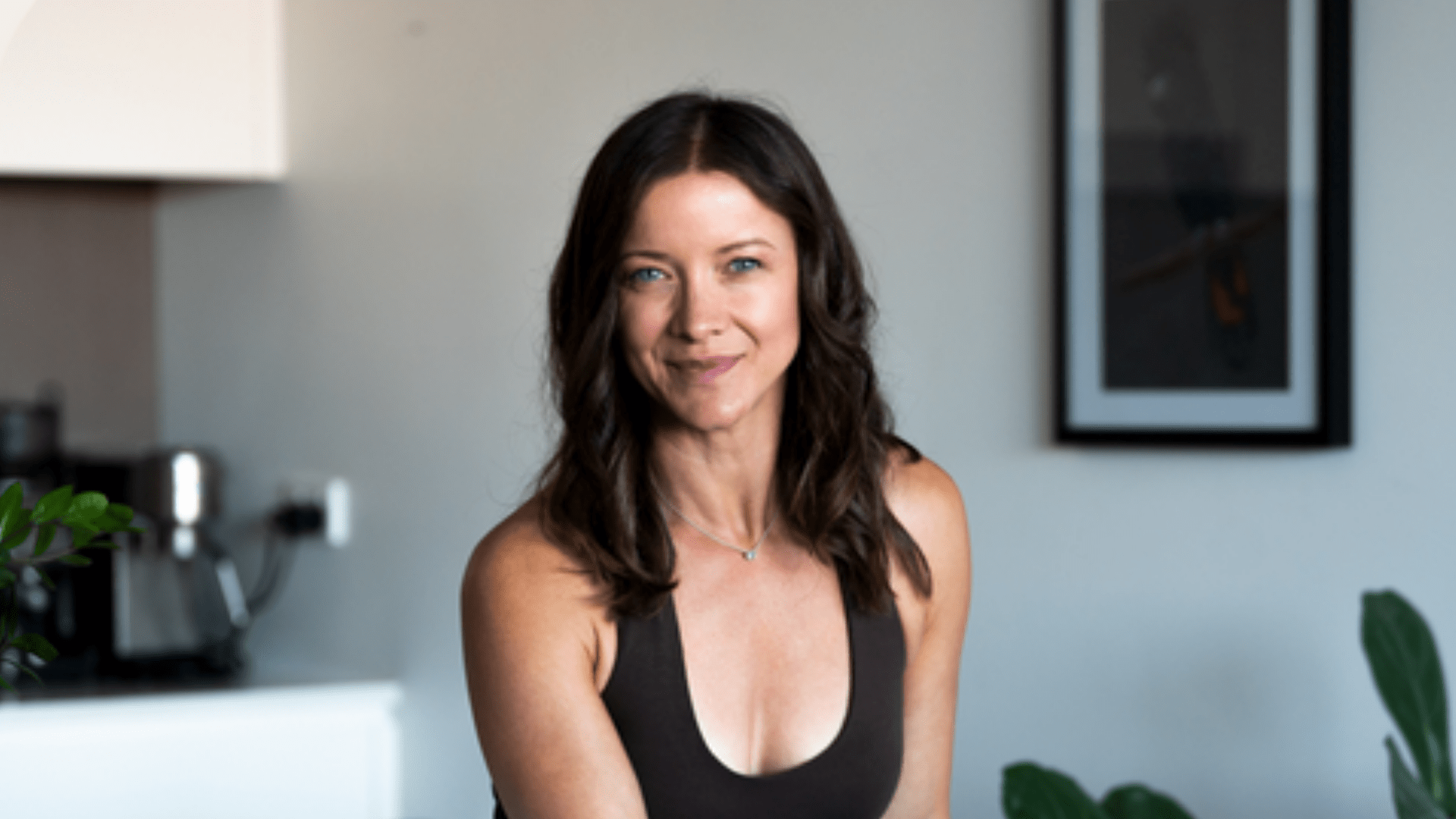
Coming Home to Yourself: How Alicia Lansdown Found Her True Nature Through Grief, Grit, and Getting Back to Basics
There is a particular kind of lost that comes not from having no direction, but from having lost the person who made you feel like every direction was possible.
For Alicia Lansdown, that person was her father.
A bodybuilder, a mentor, a man with an answer or a guiding question for everything, he was the quiet foundation beneath her confidence. When he died suddenly, she was thirty years old and suddenly without the safety net she had not even known she was standing on.
What followed was not a clean grief with a clear ending. It was years of searching, trying, experimenting, and slowly, painstakingly finding her way back to herself. That journey is now the foundation of True Nature Nutrition and some of the most grounded, honest health work being done for women today.
The current that wasn’t hers
Before her father died, Alicia describes herself as something of a free spirit. Social, spontaneous, going with the flow. His presence gave her the safety to be that way. In his absence, she realised the flow she had been riding was not actually her own.
She travelled. She moved to Mexico. She explored meditation, yoga, and spirituality. She quit drinking. She began, tentatively, to search for who she was underneath the habits and the social roles and the grief.
But her body had its own story to tell, and it was not a comfortable one. She had gained weight after her father’s death. She was eating out constantly, trying different diets, and getting nowhere. She tried vegetarianism, then veganism, then raw food veganism after completing a nutrition course in Costa Rica that she hoped would be the answer. Back in Sydney, she slipped back into the pace and patterns she had been trying to leave behind.
The answer, it turned out, was not going to come from a course or a cuisine. It was going to come from a blood panel and a very direct nutritionist in New Zealand.
Finally, the right diagnosis
When Alicia sat down with a nutritionist on a friend’s farm in New Zealand, the picture that emerged was confronting. She was consuming somewhere between 600 and 800 calories a day. Her B vitamin levels were critically low. She had a parasite, most likely from her time in Mexico. And she was highly inflamed.
The nutritionist told her to eat meat again. She had lost her menstrual cycle. Her body had been running on empty for longer than she had realised.
Within six weeks of following the protocol, things began to click back into place. But there was still more to discover. A corn allergy that had gone undetected through months of living in corn-heavy Mexico. A confirmed coeliac gene. As soon as gluten left her diet, the inflammation that had resisted everything else finally began to resolve. The weight started to shift.
The lesson embedded in this part of her story is one she now carries into every client relationship. There is no universal dietary truth. There is only the truth that fits your specific body, your specific history, and your specific life. And finding that truth requires proper investigation, not more willpower.
The bodybuilding chapter
During the first lockdown, Alicia began training for a bodybuilding competition. The structure and the physicality of it helped her mental health at first. Purpose, routine, visible progress. All of that was genuinely useful.
But pushing to extreme leanness while navigating life stressors and insufficient dietary fat created a hormonal environment her body and mind could not sustain. Sex hormones, she now understands, are neuroprotective. They regulate mood, cognition, and emotional stability. When they are depleted, the cost is not just physical.
She became deeply depressed. The person in the mirror was not someone she recognised or wanted to be. So she stopped. She did not go backwards, but she stopped pushing forward in that direction and asked herself a simpler question: what do I actually want?
The answer was honest and unspectacular. She wanted to feel strong and confident in her own body.
That answer became the north star for everything that came next.
Building True Nature Nutrition
True Nature Nutrition did not emerge from a business plan. It emerged from a series of redirections, each one pointing Alicia more clearly toward the work she was actually meant to be doing.
A photography and video production business. A marketing agency that grew unexpectedly and then contracted just as quickly when her largest clients ran out of funding. A moment of looking around at what remained and asking: what do I actually want to do?
The answer was already there in where her attention had been going all along. She was researching health far more than she was researching photography or marketing. She had applied for a nutrition degree years earlier and pulled out when life got busy. Three years ago, she went back and enrolled in health science.
She describes the experience of committing to this path as compound interest on a single decision. Every new piece of knowledge reinforced the next. Every client result deepened her conviction. And a meditation from teacher William White Cloud cracked something open in her that confirmed, beyond any rational argument, that this was where she was meant to be.
What she has learned about women’s bodies
Alicia works primarily with women, and increasingly with women navigating perimenopause and menopause. Her perspective on this season of life is grounded in both science and personal experience, and it challenges some deeply embedded cultural assumptions.
The belief that eating less is the path to health is not just oversimplified. In the context of hormonal transition, it is actively counterproductive. As estrogen fluctuates and progesterone declines, women lose the hormonal protection that supports their muscles, bones, metabolism, and cardiovascular and neurological health. The body needs more support, not less food.
Her most consistent and evidence-based recommendation is protein. Women should be consuming 1.6 to 2 grams of protein per kilogram of body weight every day. Not because protein is a trend, but because it is a fundamental building block for hormones, DNA repair, and the enzymes that make digestion possible. Without adequate protein, the body will take what it needs from muscle tissue. For women already losing muscle mass through hormonal change, this is a cycle that compounds quietly and quickly.
Alongside nutrition, she is a firm advocate for strength training, not as an aesthetic pursuit, but as the most effective tool available for managing the physical and mood-related effects of perimenopause. Hot flushes, mood shifts, bone density, metabolic rate. Strength training addresses all of it, but only when supported by the right nutritional framework.
The identity work underneath the health work
What distinguishes Alicia’s approach from standard nutrition coaching is her recognition that the body and the identity are inseparable.
Many of the women she works with know what they are supposed to do. They have read the articles, tried the programs, and still find themselves unable to sustain the changes. In Alicia’s experience, this is rarely about information or discipline. It is about nervous system regulation and identity.
One client told her she had always been a C or D student in every area of her life. That she had always wanted more but somehow never quite got there. Alicia’s view is clear: what holds most women back is not a lack of motivation. It is a nervous system that has not yet been given the safety to hold a new version of themselves.
Her own experience of this is visceral and personal. After her father died, her identity had been so fused with the safety he provided that without him, she could not find herself. Every risk felt impossible. Every new direction felt untethered. The health journey and the identity journey were always the same journey.
This is why her program begins with values and identity work alongside nutrition, and why her clients consistently report feeling better from the mindset work alone, often before the physical results are even visible. When a woman feels genuinely good in herself, the action follows. The program stops being a temporary effort and becomes simply who she is.
The truth that came last
For someone who has spent most of her adult life as a fiercely independent woman doing things on her own, navigating grief, illness, business, and reinvention largely without asking for help, Alicia’s answer to what she has learned in the last twelve months carries real weight.
Ask for support. Allow people to help. Learn to receive.
It is easy to underestimate how much that shift costs someone for whom independence has been both a strength and a survival strategy. And it is easy to underestimate how much opens up when that strategy is finally released.
Alicia Lansdown is still in the early chapters of True Nature Nutrition. She is writing a book. She is training in somatic and breathwork facilitation in Bali. She is expanding into work with young people. And she is letting it all unfold at its own pace, which for someone who once needed everything done yesterday, is perhaps the most radical change of all.
If it is your purpose, she says, the timing doesn’t matter.
She got chills when she said it. So did Megan. And likely, so will you.

![True North Show [podcast] - Season - Nikhil Rughani](https://megannorth.com/wp-content/uploads/2026/05/True-North-Show-podcast-Season-Nikhil-Rughani-768x432.png)