How to Train Your Brain to Outweigh Your Fear: C.F. Micky on Life After 33 Years of Narcissistic Abuse
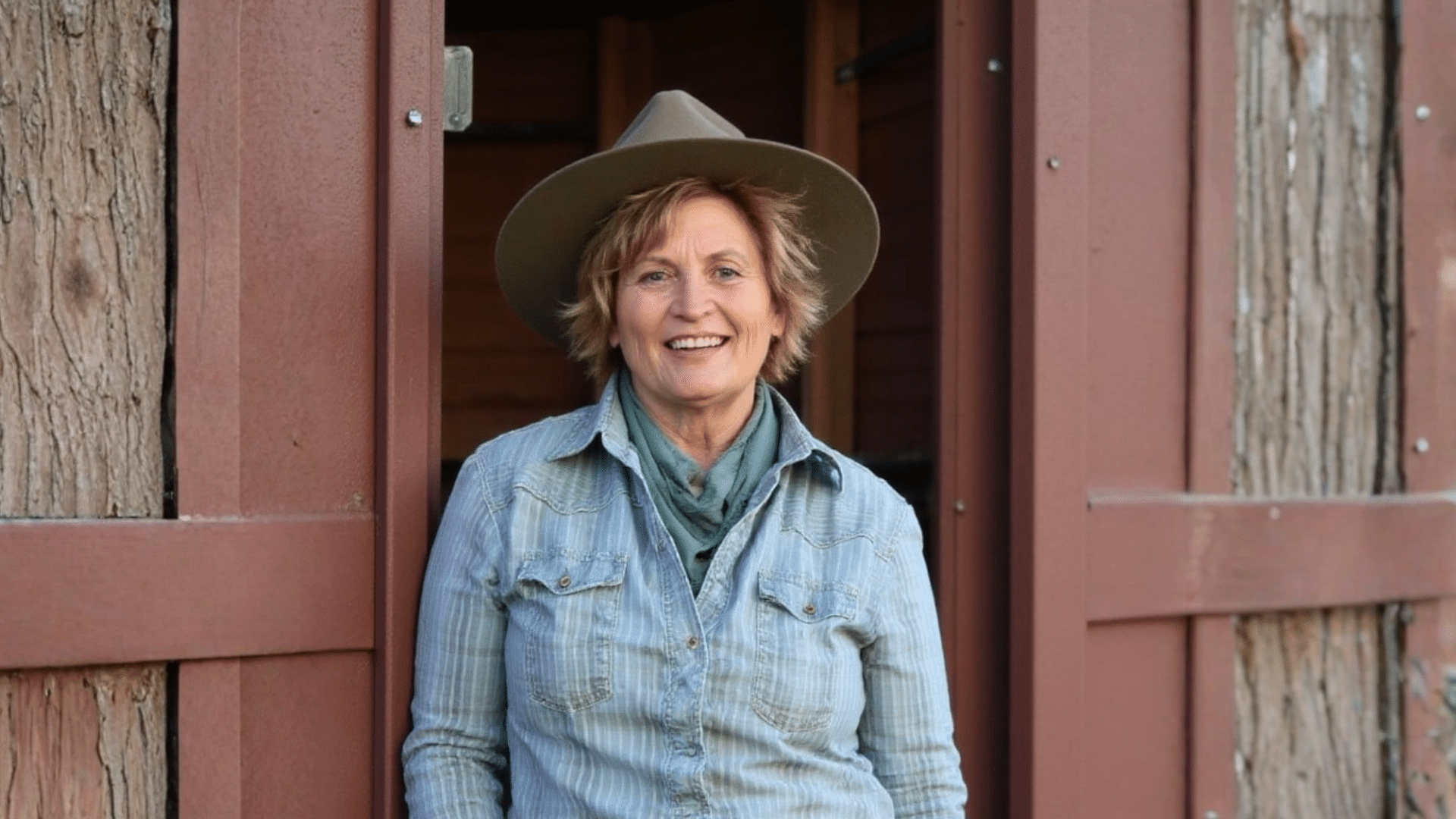
At 56 years old, C.F. Micky, known as Caty, put what she could into the backseat of her truck and drove away from a 33-year marriage on a rural farm.
She did not know how it was going to work out. She had no idea what came next. But she left.
What makes Caty’s story so remarkable is not only what she survived, but what she built in the aftermath, and how clearly and generously she now shares that journey with others who are still in the middle of it.
What Narcissistic Personality Disorder Actually Looks Like in a Marriage
Caty describes NPD not as one dramatic moment but as a constellation of traits that appear consistently, day after day, year after year. Grandiosity. Entitlement. Paranoia. Lack of self-awareness. Lack of empathy. Insecurity. A smirk at other people’s suffering.
She noticed paranoia as early as the first year of marriage. Her husband accused her of planning to run him over with a truck in the field. She laughed, because she thought he was joking. She had married him because she loved him.
That is how it starts.
The process, Caty explains, is one of grooming. It is called love bombing: good one day, pulling away and being cruel the next. Without knowing why you have fallen out of favour, you begin working harder to get back into the good graces of someone who will never explain what you did wrong. You get on a roller coaster, doing everything you can to please them. Your confidence erodes. Your identity starts to disappear.
The children in the house noticed before Caty fully allowed herself to. A visiting cousin stopped coming to the farm after observing that the children looked to their father to see whether it was safe to laugh at something funny. That was when the cousin knew something was wrong.
Why Leaving Is Never Simple
People who have not been inside a relationship like this often ask the question: why didn’t you leave sooner?
Caty’s answer is honest and specific. She came into the marriage with a child from a previous relationship and spent her first year wondering what everyone would think if she could not make it work. She questioned whether she was expecting too much. She wondered what a normal relationship even looked like.
Then the children came, and her reasoning shifted. She did not want to give her husband fifty per cent of custody time with them. She knew what he was like. Staying and making the best out of a bad situation, she believed, was the better way to protect her kids and give them the best start she could.
It was also, she acknowledges, a long process of enabling: trying to keep the peace, managing her husband’s moods, smoothing over the edges. It was only when she caught herself telling one of her adult children to do one more job so his dad would be happy that she stopped and recognised what she had become. She had been enabling his behaviour for years, and it had to stop.
The Team That Made It Possible
Caty is unequivocal on this point: you cannot leave a narcissist alone. You need a team.
Her team was a lawyer, a counsellor, and two or three close, trusted family members and friends. That structure is what enabled her to get out safely. She had been seeing a counsellor for roughly nine years before she left, building strength a little at a time. As her counsellor described it: you come in, take the bricks out of your backpack, and go out for another round.
She also emphasises the importance of finding the right counsellor, not just any counsellor. Caty tried several before finding the one she worked with for years. One charged her $160 for an hour and told her to avoid her husband as much as possible. That was not what she needed. The right counsellor prepared her mentally and emotionally for court processes, gave her tools to stay steady under pressure, and helped her understand what she was dealing with. The back of Caty’s book, Cultivating Freedom, includes a cheat sheet of questions people can use to interview a counsellor or a lawyer before committing to one.
The same principle applied to her legal team. She worked through four lawyers before finding the right fit. Her instinct told her when the first was not across her case. She trusted it, switched firms, and later learned that the first lawyer had been reprimanded by the bar. Trust your gut, she says. Particularly in the middle of a major life change, you need the right people in your inner circle.
Writing as the Path Out and the Path Forward
Caty did not set out to be a writer. Her counsellor kept encouraging her to journal. Then, after a particularly frustrating court process, she came home and sat at the computer and just started typing. The relief of getting it out was immediate.
She joined a writing group. When she shared her memoirs there, the group encouraged her to publish. They pointed out how many people are going through exactly what she went through, men and women alike. They said that part of dealing with it is getting it into the open and confronting it face on.
That became Cultivating Freedom, a book that is part memoir and part practical guide. It includes real examples from her marriage, terminology, red flags, and detailed guidance on how to leave. At the back are cheat sheets: how do you know you are healing, why you might be avoiding crowds, what your exit plan should look like, which documents to organise before you go.
Her editor told her she was having so much trouble with the book because it was so emotional. A fellow writer in her group told her he felt her pain. For Caty, that was confirmation she had done it right.
Since publishing, she has also contributed chapters to two multi-author compilation books, She Thrives and Breaking the Silence, both available on Amazon. She has three more book launches in progress, including Cultivating Freedom 2, which dives deeper into the questions she is most frequently asked.
Life on the Other Side
Caty lives on the farm now on her own terms. Her son runs the farm. Her 83-year-old mother still does the farm books, orders chemicals, drives everywhere, and, as Caty says, is sharp as a whip. Her grandchildren visit and they make jams and jellies together. Her eight-year-old grandson fixed the shop door before she could get to YouTube to look it up.
She wakes each morning with the window open to the birds. Farm birds, she says, sing differently from town birds. She gives herself half an hour to an hour of complete silence before the day begins. No television, no radio. Walking. Working in the yard. Being on the tractor. These are her practices.
She describes herself as dumbfounded when she looks back at how far she has come. When you put your life on paper, you find yourself thinking: this was so dysfunctional. How did I ever survive?
The answer, she says, was the team.
The Lesson She Wishes She Had Known Earlier
At the end of the conversation, Caty offered the one truth she would have wanted to know sooner.
“How to train my brain to outweigh my fears.”
Fear keeps us from doing a lot of things, she says. She has one life to live, and she intends to enjoy it. She believes that the experiences we are placed in are there for us to learn from and grow from, and that purpose comes to light through exactly that process.
For anyone who recognises something of themselves in Caty’s story, her first recommendation is straightforward: find a counsellor. Read. Listen. Learn as much as you can about what you are dealing with. Build your team. And trust your gut.