
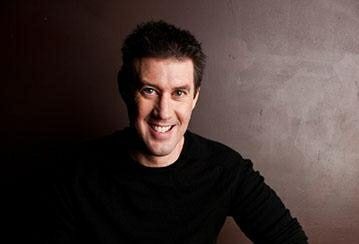
Greg Riley: From Corner Office to Consciousness, and Why “Purpose” Might Be the Wrong Target
There’s a particular kind of tired you only get when life looks successful on paper, but feels empty in your chest.
Greg Riley knows that tired.
In a recent conversation on The True North Show with Megan North, Greg shared a story that is not neat, not polished, and not wrapped in a “just manifest harder” bow. It is the kind of story that starts with corporate achievement, slides into survival mode, and ends with an uncomfortable truth many people spend years avoiding.
Not everyone needs a new goal. Some people need a new relationship with experience itself.
The breakdown that broke the spell
Greg describes his turning point in the bluntest possible way: a complete breakdown.
From the outside, everything looked “right.” Career trajectory. Status markers. The dopamine hits of achievement. The whole “I’m doing well” starter pack.
But Greg’s point is this: the dopamine chase has an expiry date.
You hit a target, you feel good, the feeling fades, and the goalposts move. Then you chase again. And again. Eventually, you are not building a life, you’re feeding a machine that never says “enough”.
Greg also speaks openly about the coping mechanisms that can sit quietly inside high-performing corporate culture: substances, emotional shutdown, surface-level relationships, and the relentless pressure to keep the façade intact.
Because in environments built on performance, struggling is treated like a career-limiting injury.
The unlikely doorway: meditation, tarot, and human behaviour
What’s interesting about Greg is not just the spiritual side, it’s the combination.
He didn’t wake up one day and become “a spiritual guy.” He followed curiosity, one door at a time:
- Martial arts
- Meditation
- Hypnotherapy and an early obsession with human psychology
- A gradual move into spiritual development practices like tarot and psychometry
- Then a deep dive into frameworks, books, and philosophies that explore how humans create meaning, identity, and suffering
His point is not that any one tool is the answer.
His point is that people are desperate to feel better, but many are trying to treat the symptom instead of the driver.
And the driver, most of the time, is the identity we are running.
The core belief: life’s purpose is experience
This is the line Greg keeps coming back to:
Life’s purpose is experience.
Not achievement. Not being “healed.” Not building a personal brand with 47 revenue streams and a morning routine that needs a project manager.
Experience.
That includes the parts people try to spiritually bypass: grief, shame, despair, betrayal, rage, fear, loss. Greg’s stance is that those emotions are not proof you are broken. They are part of the human contract.
He pushes back on the popular idea that the goal is to escape the “3D world.” His view is that you chose a human body for a reason: to live the human experience, not float above it pretending you are too evolved to feel.
So rather than trying to delete discomfort, Greg’s work centres on helping people develop the capacity to feel again.
Not in a dramatic, performative way. In an honest way.
Spiritual bypassing and the performance of “being evolved”
Greg gets spicy here, and honestly, good.
He calls out the ways spirituality can become just another identity costume:
- “Rules” that look suspiciously like another religion
- “Vulnerability” as a trend, rather than genuine emotional truth
- The obsession with techniques, steps, and hacks, as if your nervous system needs a subscription plan
He frames it as a kind of spiritual ego: “Look how spiritual I am,” while still avoiding the hard personal honesty.
Because authenticity is not aesthetic. It’s integrity.
And integrity requires you to look at the parts of yourself you would rather edit out.
Why Greg stopped doing “feel-good” psychic readings
This is one of the most practical parts of Greg’s story.
He describes how many people seek readings for the same three things: love, work, money. Often love.
And many are not asking for depth. They are asking for comfort.
They want the promise that “Dave is coming in October,” not the reality check that their relationship patterns are repeating because unhealed identity wounds are driving their choices.
Greg’s approach is different. He’s far more interested in:
- patterns
- personal responsibility
- identity drivers
- and the internal beliefs shaping external outcomes
His take is that a big part of what looks like “psychic prediction” is actually humans being predictable when they keep running the same identity and the same nervous system responses.
It is not magic. It is pattern recognition.
That’s why his work leans into uncomfortable honesty. Because comfort without change is just a prettier cage.
The real wellbeing shift: slow down and listen
When Megan asks Greg what he does now for mental health and wellbeing, he doesn’t list a complicated routine. He basically says: stop trying to buy your way out of yourself.
He calls out the fantasy that if you’re stressed 23 hours a day, a yoga class will fix the other hour.
His answer is refreshingly simple:
- slow down
- breathe
- get barefoot on grass or sand
- be present
- listen, properly listen
Not listen to respond. Listen to hear.
His point is that many people are trapped in their heads, obsessing over technique. Even heart-based practices can become another task on the to-do list.
The nervous system doesn’t need a performance. It needs safety.
And safety often starts with presence.
The lesson Greg wished he learned earlier
When Megan asks him what truth he wishes he’d learned earlier, he doesn’t say “I regret everything.” He says he doesn’t regret it, because changing the past would change the person he is now.
But he offers a principle he would hand to anyone, especially high achievers:
Open your heart. It is your superpower.
Not the polished, inspirational version of “open your heart.”
The real version, where you stop protecting yourself with status, productivity, humour, or detachment, and you let yourself be an actual human again.
Because a mind and heart that are coherent, aligned, and honest is incredibly hard to manipulate, and almost impossible to derail.