
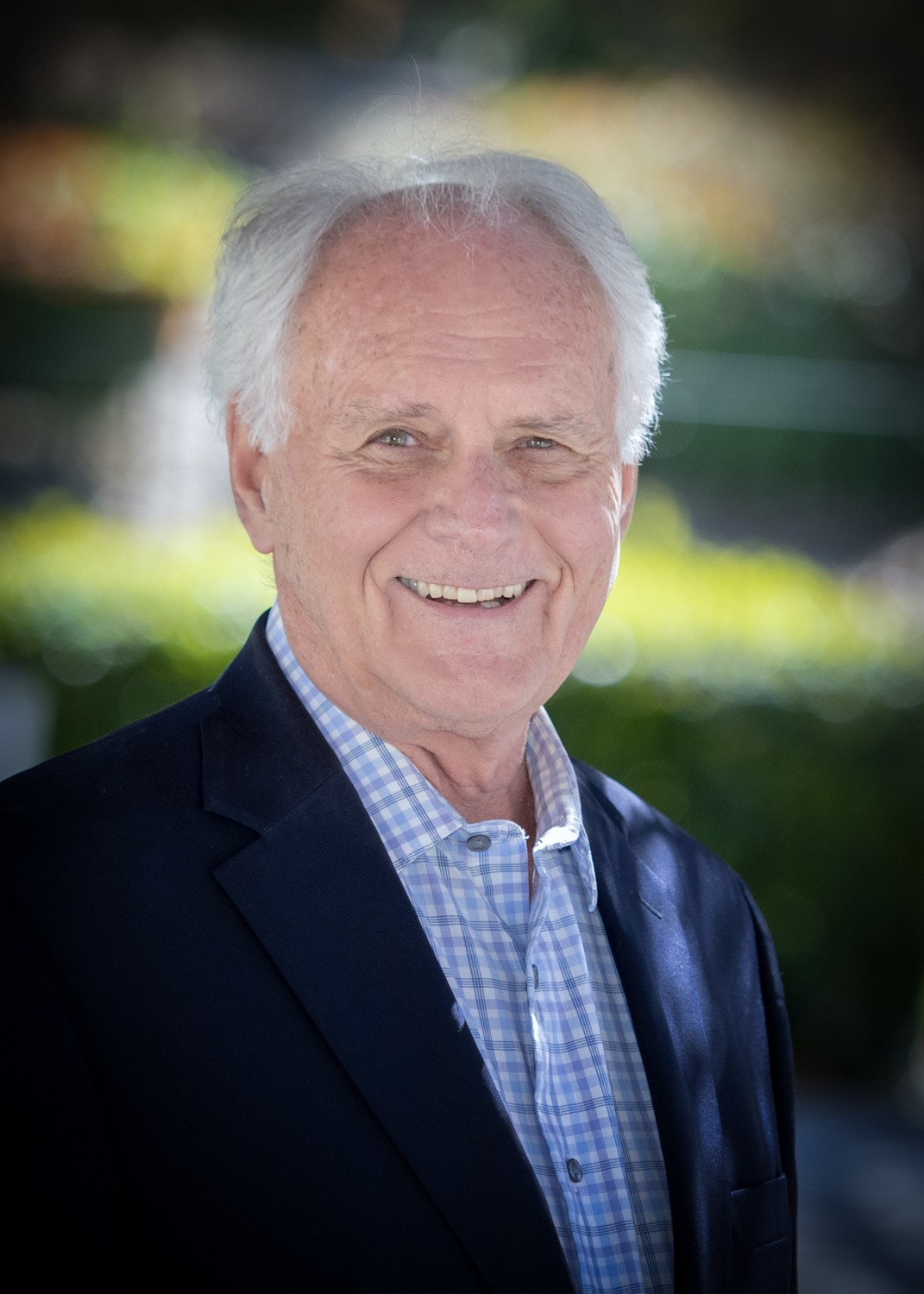
What It Means to Truly Give Yourself Away: The Life and Philosophy of Larry W. O’Nan
Larry W. O’Nan was supposed to be on Broadway. Or Hollywood. He had not quite decided which.
For the first two years of university at the University of Colorado, theater was everything. He performed. He directed. He immersed himself entirely in a world built on transformation, on becoming someone else entirely for the length of a play. And then, sitting in a class one afternoon, something stopped him cold.
He looked around the room at his fellow students and realised that no one in it was themselves anymore. They had all learned to act, and they had taken the acting offstage with them permanently. Nobody in the room was really who they were. Not even Larry.
“This is no way to live a life,” he thought, “if you’re always putting on makeup and you’re always doing something else that’s not yourself.”
That single moment of clarity, in a college classroom in Colorado, sent Larry O’Nan on a search that would ultimately shape five decades of work, two books, and a philosophy that has touched lives across the United States, Northern Ireland, and the Philippines.
From the Stage to a Different Kind of Calling
The search that followed his theater realisation led Larry to an unlikely place. Two engineering students, people who could not have seemed more different from the theater crowd, introduced him to a faith that felt nothing like the religion he had grown up in. His father had been a pastor in western Colorado, and church had been a fixture of post-war rural life. He remembered two older women who did not speak to each other for years because they disagreed on the color of the fellowship hall paint. That was religion as performance. What he saw in those two engineers was something else entirely.
He graduated with a double major in English and theater, planning to become a secondary school drama coach. He never did. But the thread that ran through theater and into faith, the question of who we really are and what we are really here to do, would define everything that followed.
The Word That Changed His Career: Steward
Central to everything Larry O’Nan teaches is the concept of lifestyle stewardship. It sounds formal, even corporate. In practice, it is one of the most disarmingly simple reframes available.
A steward, Larry explains, manages somebody else’s affairs. He draws the analogy precisely: the cabin crew on an airplane are not there to serve you drinks. They are employed by the airline to manage a multi-million-dollar piece of equipment. An accountant managing a client’s finances is handling money that is not theirs. In both cases, the steward’s job is to act on behalf of someone else, carefully, effectively, and with the goal that the whole enterprise lands safely.
Applied to a human life, the question shifts. If we are stewards of what we have been entrusted with, our time, our talent, our relationships, our resources, then the question is no longer “what do I want?” The question becomes: “Am I being an effective steward of what I have been given?”
This reframe, Larry says, is earth-shattering when it truly lands. It removes the anxiety of ownership and replaces it with the clarity of responsibility.
Strength, Weakness, and the Exhaustion of Getting It Backwards
Larry is pragmatic about how this philosophy plays out in daily life. One of his most useful distinctions is between working in your strength and working in your weakness.
When you work in your strength, you can work for 24 hours and never need a break. You are energised by it. You seek it out. When you work in your weakness, an hour or two drains you completely.
He gives a vivid personal example. He has been setting up a Google Suite infrastructure for a network of preschools in the Philippines, a project that falls entirely outside his natural gifts. He works on it for an hour and is exhausted. But when he is speaking, connecting people with purpose, or helping an organisation understand how to serve its mission? He is fully alive.
“Please don’t ask me to come in and work on your finances,” he says, “because you’re not gonna be happy and I am gonna be miserable and tired the whole time.”
He sees this mismatch everywhere. People who retired from decades in a role they were genuinely good at, sitting at home with nothing to do, depleted and purposeless. He swims at 5am three days a week at the instruction of his doctor, and regularly swims alongside a man ten years younger than him who confesses he cannot handle retirement. Meanwhile, Larry cannot get through everything on his list for the day.
The difference, he says, is not energy or luck. It is knowing what you were made to do and doing it.
The Bell in the Belfry
One of the stories Larry tells in his book Intentional Living and Giving captures the heart of his philosophy with remarkable economy.
In 1947, his father dedicated a small church in western Colorado. At the dedication, his father remarked that the only thing missing was a bell for the belfry. That offhand comment was overheard by a pastor from another church, who mentioned it in passing to his own congregation. A woman in the audience, who had driven 20 miles to hear that pastor speak because she liked him and had heard him on the radio, went home and wrote a letter to a national radio program called the Heart’s Desire Program, asking for help getting that church its bell.
One year later, over 224,000 pennies had arrived from 38 states. Forty governors sent congratulatory letters. The story made the front page of the New York Times.
The bell still hangs in the church today.
Larry’s point is not about the bell. It is about the woman who wrote the letter. She could have gone home and done nothing. She almost certainly thought, as we all think: that’s not my job. That’s somebody else’s problem. I don’t have time for that. Instead she sat down and wrote a letter, and something extraordinary happened.
“Every one of us can be a Helma Weber,” Larry says, “and every one of us can see a bell ringing in a belfry if we just wanted to step out and do it.”
Loss, Change, and What Grows in the Dark
Larry O’Nan has lived a full enough life to have tested his philosophy against real grief. He has been let go from roles four or five times over the course of his career. He lost his wife of 45 years to a glioblastoma brain tumour a decade ago. He does not use the word “died.” He says she changed her address.
That is not denial. It is not a coping mechanism in the avoidant sense. It is the product of a faith that has been worn in through genuine experience, and a philosophy that insists growth happens in discomfort.
A pastor he heard speak recently said something he has repeated since: “Living things grow. Growing things change. Change is always uncomfortable.”
He sees people stuck in grief ten years after a loss, unable to move because they are focused on what happened to them rather than what might grow from it. He wrote about his wife’s death and found it one of the healthiest things he ever did. Looking back at the darkest moments, he can now find things to laugh about.
“The story is still the story,” he says simply.
At 82, There Is Still Too Much to Do
Larry O’Nan is 82 years old. He will tell you himself: he cannot commit to anything beyond ten or fifteen years because he likely will not be here. He says it without self-pity and without drama. He says it as a practical observation that sharpens his attention to what matters today.
He has two grandsons who both recently married within six months of each other. He is working with indigenous Okta tribal communities in the Philippines, partnering with a missionary who speaks five languages and houses 51 people in a single compound. He is preparing three book launches. He is writing one-to-four paragraph family stories for his grandchildren so they have something to remember when he is gone.
And every morning, he wakes up and asks the same question: what am I going to do today that will impact the life of somebody else?
That is intentional living. Not a system or a framework. A daily orientation toward something larger than yourself.
His most recent book, Intentional Living and Giving, is the distillation of everything he has learned. It began with a conversation in Northern Ireland three or four years ago, where a group of Eastern European leaders said they could not find anything to teach people what lifestyle stewardship actually was. Larry went home and wrote it.
“I’m motivated by helping people live life,” he says. “If it means a book can be written and I’ve got the skills, then I should write a book.”
At 82, still swimming before sunrise and still asking the right question every morning, Larry O’Nan is doing exactly what he was made to do.