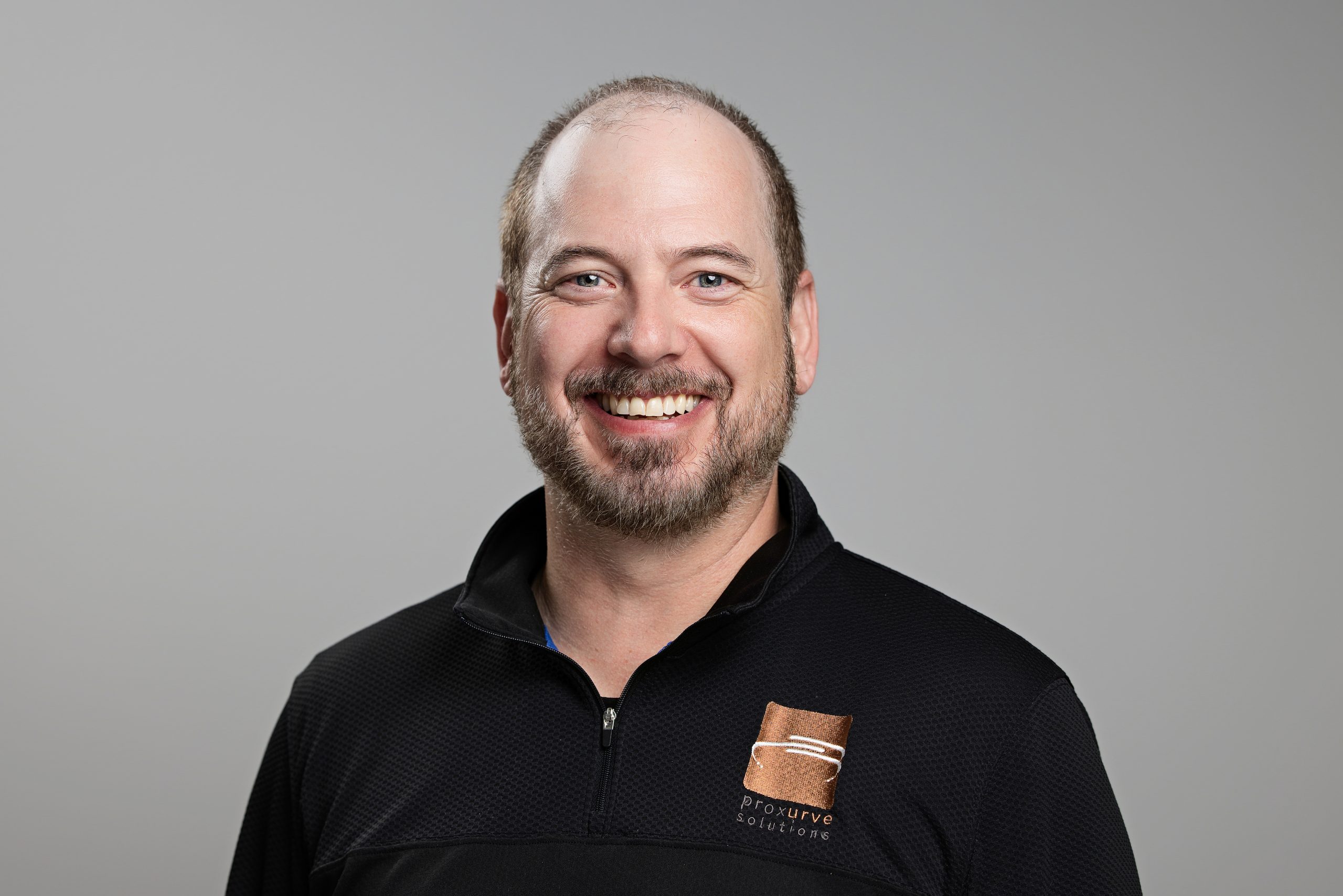
The Human Behind the Tech: How Brian Beck Turned a Gift for Translation into a Career Built on Connection
There is a particular moment Brian Beck describes that explains almost everything about who he is and why he does what he does.
He is sitting in a hall with a couple of hundred people, watching Microsoft present on a new technology called the cloud. Two hours. Thirty slides. Every kind of arrow and pictogram and acronym you can imagine, arranged to describe how a piece of technology all comes together, delivered with the genuine brilliance and enthusiasm that engineers bring to things they love deeply.
And Brian is looking around the room at the business leaders he recognises, and their faces are completely blank.
He starts connecting the dots in his own head. And then it lands: it is basically a secure server that is not inside your building. That is it. That whole presentation could have been thirty seconds. This is what it is. This is why it matters to your business.
In that moment, Brian knew. If he could be that translator, not the engineer who understands every layer of how the technology works, but the person who can take all of that and say here is what it means for you and your organisation, that was worth building a career on.
More than twenty years later, he is still doing it.
Where the gift came from
Brian grew up between two family cultures, Italian and Irish, and both of them taught him something. On the Italian side, food, football, and family noise. On the Irish side, at the end of every dinner, everyone gathered around the piano.
His Uncle Bob was the one who stayed with him. You could hum two bars of any song at Uncle Bob, a song he had never heard before, and he would pick up whatever instrument was closest and be off and running. Banjo, guitar, piano, organ, it did not matter. The music was just there in him.
Brian found his version of that gift with the bass guitar. He discovered it one night while taking out the garbage, Sony Walkman on, when a riff from a metal band stopped him completely. He could not place the instrument but he could not stop listening to it. He ran inside to his mum, who listened for two seconds and said: honey, that is bass guitar. His response was immediate and total: I want that.
The next morning she took him to a local music store in Niles, Illinois. The owner handed him a four-string bass and a ten-watt amp. Within five minutes Brian said: this is what I want to do. She bought it. He went home, went down to his basement bedroom, and learned an entire Iron Maiden album in about an hour.
Within three months he was being passed around to every band that needed a bass player, because nobody else wanted to play bass. He became good. Very good. He won competitions, played in bands that travelled for regional events, and through all of those years on stage he developed something that would serve him long after the bass was put down: the ability to read a room.
Playing with the same intensity every time
One of the band leaders Brian played with gave him a piece of advice that has stayed with him ever since. It does not matter if there is one person in the room and the only person you are playing for is a bartender, or you are playing to tens of thousands. You play with the same intensity every single time. You do not know who is in the room or why they are there, but you give it everything you have at every single moment and every opportunity.
That lesson, absorbed on a stage, has shaped how Brian walks into every boardroom, every leadership meeting, and every conversation with an organisation trying to figure out what to do about AI.
When he enters a room before a presentation, he is already reading. Are people laughing before the meeting starts? Talking about last night’s game? Asking about each other’s kids? Those are cues. They tell him whether humour will land, whether he needs to be the expert immediately, whether there is an opportunity to connect before the business conversation begins.
He is not above making a fool of himself to get someone to laugh for a second, because a moment of genuine laughter drops the guard and the conversation that follows is more honest and more useful. But he is equally skilled at reading when the room wants precision, seriousness, and facts, and shifting accordingly. He has built genuine professional friendships from rooms full of strangers, simply by paying attention and being willing to connect.
The most important question nobody is asking
Brian hears a version of the same conversation constantly at the moment. Leaders calling to say they want to use AI. And when he asks: to do what? The answer is essentially: something. Anything. Everyone is doing it.
His response is to reframe the question entirely. In every other area of business, a leader who wants to implement something has a goal, a strategic rationale, a conversation with their team, some kind of plan. Why is AI treated differently?
The single most important question every business leader should be asking right now, in his view, is not which tool to use or what the hype says is possible. It is: how do I use this to scale?
That question forces specificity. It forces a conversation about what the organisation is actually trying to achieve, what processes would benefit, how many people need to be trained and on what, how data is governed, and what the return on investment actually looks like. Without that question, AI becomes a distraction rather than an enabler.
He draws a clarifying distinction that I found genuinely useful. The cloud changed how organisations store and govern information, but it did not fundamentally transform how they run. The internet was different: it genuinely reshaped society, there was overreaction, then correction, then a balance that now just feels normal. AI is closer to the internet in that it has real cultural impact, not just technical impact. Leaders who do not understand that are walking into significant and expensive territory without a map.
The world’s most powerful intern
One of the clearest ways Brian describes AI in an organisational context is this: it is the world’s most powerful intern.
You would not have a human walk through the door on their first day and hand them the keys to every system in the organisation with absolutely no oversight, no access controls, no governance plan. Why would you do that with an AI tool?
He sees this particularly clearly when working with not-for-profit organisations, where board members sometimes arrive saying: we should use this, I use it at home. And Brian has to stop the conversation and walk them through what they are actually talking about. The organisation serves thousands of people. It has donors and sponsors whose money and reputation are connected to it. Some board members are tied to significant external organisations. Introducing an AI tool without a plan exposes all of that.
One tool. One plan. Proper training. Clear governance. The right people with access to the right data. That is how it gets done well. And just because you can do something does not mean you should. And if you are going to, you should do it right.
Family first, always
For all of the technology strategy and all of the leadership conversations, Brian is clear about what actually anchors him.
His family comes first. The people he works with know it. If his wife needs something, or something is happening with his son, that takes priority immediately and no one questions it.
His son is nearly nineteen. Brian says he could not be more proud of who he is becoming. They used to play superhero soccer in the backyard, Brian dressed as Batman and his son as Robin, not caring who could see them over the fence. They made a YouTube channel together when his son was around ten or twelve, and they still go back occasionally and watch it, just to hear that younger voice laughing. His son sends him songs to listen to. Brian says you are going to get the emotion out of him on all of this.
His wife is, without any doubt, his rock. She keeps him grounded, keeps him honest, and keeps reminding him, in that accent of hers, that maybe they are getting a little old for full-contact football. He comes limping home and admits she was right. Then probably forgets by the following weekend.
Relationships. Period.
When asked for the one truth he wishes he had known earlier, Brian did not hesitate.
The importance of connections. Relationships matter. Period. He puts it in bold on PowerPoint slides. He says it to his organisation. He means it completely.
Being in the same room with people, shaking their hand, watching where their hands are and whether they are getting fidgety, hearing the inflection in a voice, reading the things that are happening under the table that a screen can never show you: all of that changes the quality of the connection and the quality of what gets done.
In a world where so much of business has moved to a two-dimensional screen, where people are living on their phones at family gatherings instead of making the memories available to them right there in the room, the people and organisations that understand the irreplaceable value of genuine human connection are the ones building something that actually lasts.
Brian Beck has spent more than twenty years explaining complex technology to people who needed to understand it clearly. And after all of it, the thing he keeps coming back to has nothing to do with technology at all.
It is the people.


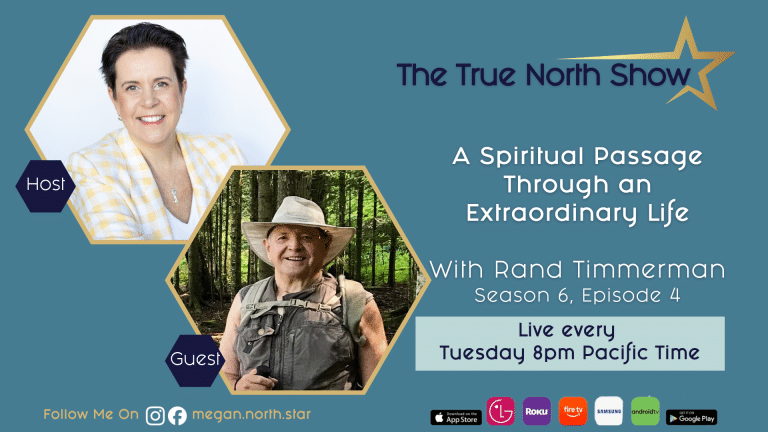
![True North Show [podcast] - Season - Mitch Toner](https://megannorth.com/wp-content/uploads/2026/07/True-North-Show-podcast-Season-Mitch-Toner-768x432.png)