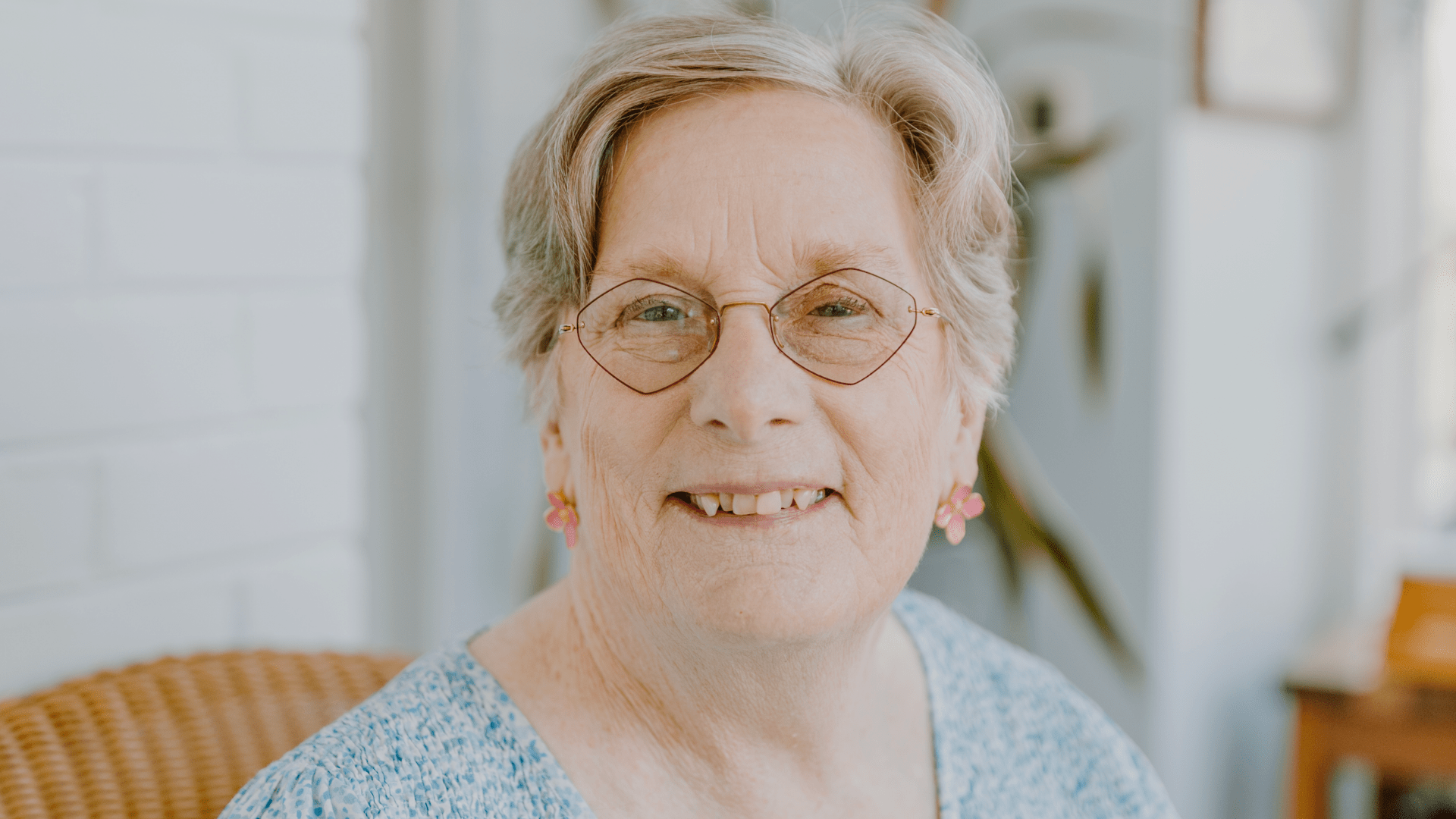
Raising Boys With Empathy And Intention with Dr Gloria Vanderhorst
After more than 50 years in psychology, Dr Gloria Vanderhorst has reached a powerful conclusion:
We are shaping boys in ways that limit them long before they understand what is happening.
And it does not have to be that way.
A licensed psychologist in Maryland and Washington, DC, Dr Vanderhorst has spent decades working with individuals, couples, and families. Her clinical work is grounded in neuroscience, attachment theory, and a deep respect for lived experience. But in recent years, her focus has sharpened around one urgent and deeply personal question:
What does it really mean to raise emotionally intelligent boys?
A Career Redirected by Calculus
Dr Vanderhorst did not originally set out to become a psychologist. She was a math major with a clear goal: graduate early, achieve straight A’s, and teach high school mathematics.
Then Calculus 2 happened.
What felt like failure at the time became a redirection. Switching her major to psychology was not part of the plan, but it proved to be the right path. She often describes that moment not as defeat, but as alignment.
That early pivot shaped a career that has now influenced generations of families.
The Brain Remembers Everything
One of Dr Vanderhorst’s core beliefs is simple yet profound:
Your brain has stored everything, and you can access it.
From the last trimester in utero onward, the brain records experience. Not just in words, but in images and bodily sensations. While language is the most accessible form of memory, visual and kinesthetic memory often hold deeper layers of truth.
This understanding forms the foundation of her writing and therapeutic approach. Her journal-style books invite readers to explore their inner world beyond language, using prompts and reflective exercises that open access to memory stored in less obvious ways.
Healing, in her view, is not about inventing something new. It is about uncovering what is already there.
The Hidden Emotional Range of Boys
Dr Vanderhorst’s work with boys began decades ago when preschool teachers started referring energetic young boys to her practice. Many of these boys were not disordered or defiant. They were simply expressive.
Research confirms something surprising: boys are born with a broader emotional range than girls. They experience both higher highs and deeper lows.
Yet almost immediately, culture begins narrowing that range.
Little girls are comforted quickly when distressed. Boys are often questioned, dismissed, or redirected. Tears are discouraged. Sensitivity is labelled weakness. Emotional expression becomes something to suppress rather than develop.
Over time, boys learn that only a small slice of their emotional capacity is acceptable.
The cost of that narrowing can be seen later in life. Emotional suppression does not disappear. It internalises. It manifests physically. It shows up in strained relationships, performative strength, and disconnection.
Dr Vanderhorst believes this is not simply a parenting issue. It is a generational pattern that must be addressed intentionally.
The Father Factor
Her upcoming book, How Not to F Up Being a Father, focuses squarely on the role of fathers in reshaping this pattern.
She is clear about one thing: this work is not about blame.
It is about awareness.
Fathers, she explains, can only parent from the shape they have inherited. If that shape was formed in emotional restriction, it must first be examined. Healing the father’s history creates emotional freedom for the son.
In her work, Dr Vanderhorst helps fathers revisit their own childhood experiences. She encourages curiosity rather than defensiveness. She often reminds clients that what feels like a brick wall is usually tissue paper. It can be broken through.
When fathers expand their own emotional capacity, sons gain permission to retain theirs.
The impact is not limited to one generation. It ripples forward.
Genuine Connection Over Performance
One of Dr Vanderhorst’s deepest concerns is the rise of performative connection. Boys and men often learn to perform strength, control, and detachment rather than embody authenticity.
Genuine connection requires access to vulnerability. It requires comfort with the full emotional spectrum.
Her vision is simple yet transformative: boys who grow into men capable of deep, authentic connection in friendships, partnerships, workplaces, and families.
Not men who perform strength, but men who integrate it with emotional awareness.
The Therapist as Human
After five decades in practice, Dr Vanderhorst remains grounded. She emphasises the importance of therapists maintaining interests beyond their profession. Music, watercolour painting, creative expression, and spiritual practice are not hobbies for her. They are safeguards.
Without outlets, she explains, therapeutic work can stagnate. The mind needs expansion. It needs creativity and variation.
Her life reflects the same principle she teaches: growth is multidimensional.
The Lesson She Wishes We All Knew
When asked what she wishes she had known earlier, her answer is direct:
Your brain has stored everything, and you can change what shaped you.
That statement carries enormous hope.
Nothing is lost. Nothing is permanently fixed. The stories that shaped us can be revisited. The patterns that narrowed us can be widened.
And for fathers raising boys, the opportunity is profound.
By choosing empathy and intention, they are not just parenting differently. They are altering emotional inheritance.
That is generational leadership.
And that is the legacy Dr Gloria Vanderhorst continues to build.