Chad Taylor on Why the Problem in Your Relationships Is Probably You
Chad Taylor did not arrive at psychotherapy through the conventional route. He spent a decade running a successful plumbing business with up to ten employees before walking away from it to go back to university. He had fast cars and a Harley. He was making serious money. And nearly everyone around him thought he had lost his mind.
He did it anyway.
That willingness to blow up a comfortable life in pursuit of something more aligned is not just a biographical detail. It sits at the core of everything Chad now does as a clinical psychotherapist, author, and podcast host. His central message is confronting, simple, and something most of us spend enormous energy avoiding: the problem in your relationships, your patterns, your recurring struggles is probably not out there. It is probably you.
From addiction to apprenticeship in the chair
Chad entered recovery from drug and alcohol addiction at 22. By then, he had lost 32 jobs in the final two years of his drinking. He describes that period not as a mild problem but as a genuine crisis. He would have rather chosen not to live than face a life without alcohol. Getting sober was one of the biggest pivots of his life, though he says he was little more than a kid at the time.
What followed were decades of what he calls an apprenticeship in the client’s chair. Long before he had any clinical training, Chad was sitting across from therapists and working through his own material. When he eventually studied psychotherapy at university, his course required students to provide receipts proving they were attending paid, supervised therapy sessions throughout their degree. He believes this requirement, which he says does not apply to psychology training in Australia, is exactly what creates a clinician who can actually sit with another person rather than merely read about it.
He goes to therapy every week still. He tells his clients this in the first session.
The clay Buddha and the ego we don’t talk about
One of the more striking ideas in Chad’s work is the way he explains how the ego and its protective mechanisms develop from early childhood. He draws on the parable of the clay Buddha: a golden statue, the most prized possession of a town, covered in clay before a wartime invasion to keep it safe. The town was taken over and everyone was killed. For 1,500 years, people walked past and saw only clay. Then one day a crack appeared, and someone looked in and found gold.
Chad uses this parable to describe what happens to us. From birth to around age three, he says, we exist in the present moment. We do not worry about the past or the future. And then around age three, we begin to realise we are separate. Fear enters. And the psyche, like the body, develops protective mechanisms.
The body creates fever to fight illness, coagulates blood to close wounds. The psyche builds what Chad calls egocentricity: layer upon layer of protection around the self, formed in response to even small experiences of rejection or disconnection. By the time we are adults, we are so thoroughly encased in this persona that we have forgotten the gold that is underneath. And when someone tries to reach us, what they encounter is the clay.
The more significant our early experiences, he says, the thicker the clay.
The practice is harder than the talking
Chad is direct about what he sees as the gap between talking about mental health and actually doing the work. He draws a clear distinction between intellectual learning and lived experience, and suggests that our current cultural relationship with mental health is heavy on the former and light on the latter.
He uses the example of road behaviour. He can sit in a meditation practice with expensive noise-cancelling headphones, in the perfect spot, with the sun coming in just right. That is easy, he says. The real measure of how the inner work is going is how he reacts when someone cuts him off in traffic. The mat is the practice. The car is the test.
He is equally direct about the limits of what he calls a tick box approach to mental health in workplaces. He believes that many businesses talk well about wellbeing and still quietly marginalise people who are genuinely struggling.
What he does differently in the room
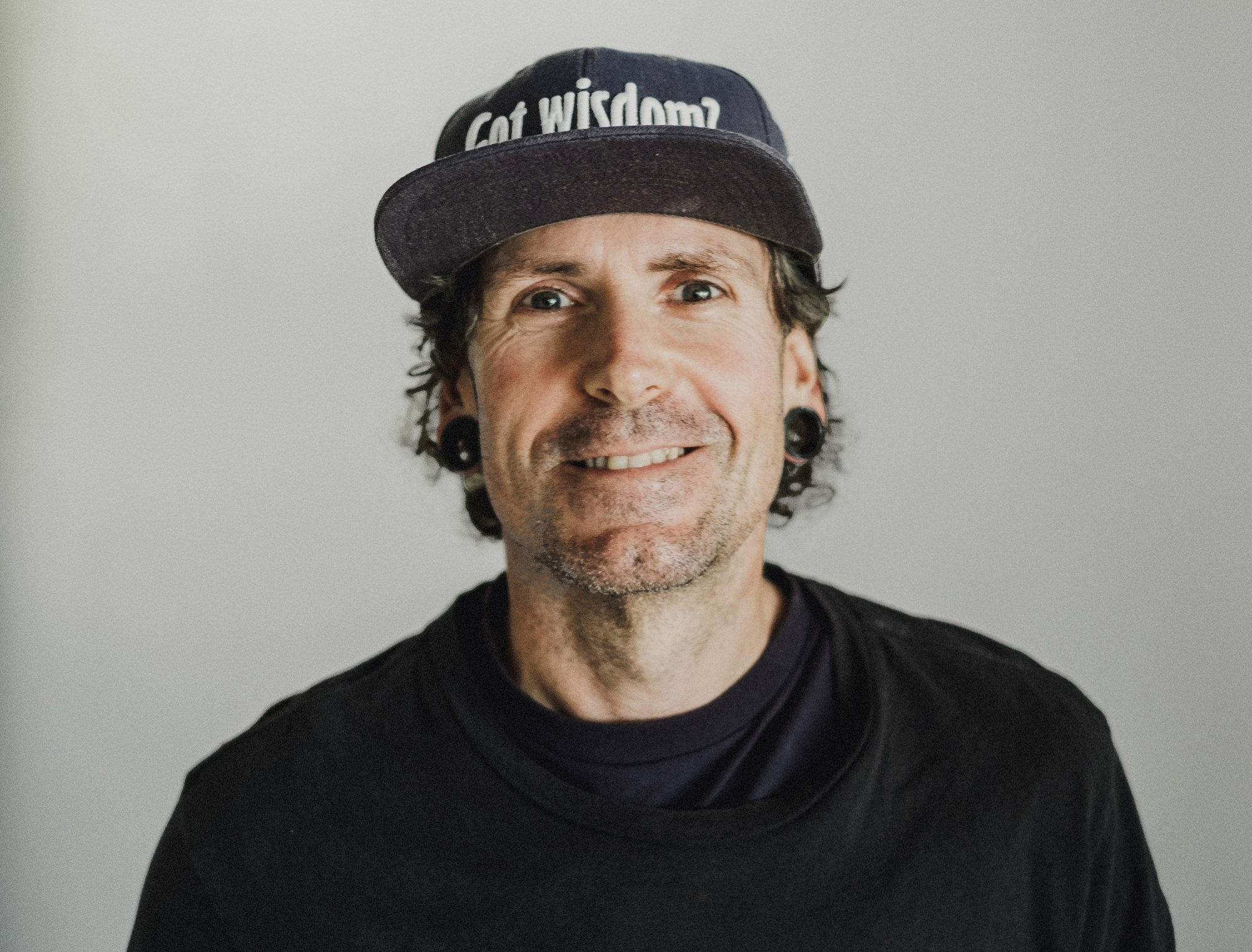
Chad describes his clinical approach as doing nearly everything the opposite of what his training prescribed. He does not take notes in sessions because he believes that every moment he is writing, he is missing 30 per cent of the conversation. He wears a hoodie and a hat and often no shoes to work, in summer. His office has large windows and looks out over the view. His rationale is straightforward: if he is asking clients to show up authentically and become their true selves, he needs to model that.
He uses analogies heavily, and he draws from his own life. If he reacted to something his wife said with his habitual pattern of withdrawing and manipulating through silence, he will bring that into a session as an example. Not to centre himself, but to name the behaviour and show that he is not above it.
The most powerful question he uses in sessions, borrowed from a fire captain he once worked with: What is the one question you think I should ask you as a client? And how would you answer it? If the answer is “I don’t know,” his follow-up is: If you did know, what would the answer be?
The book that is not trying to make you feel good
Chad’s book It’s You, Oh F**k, It’s Me was written in three and a half weeks while on holiday and was ready to publish by the time he flew home. He self-published it and describes it as intentionally not for people who normally read self-help. The language is direct. The tone is confronting. A former university lecturer told him it was like a punch in the face, in a good way. He put that on his marketing banner.
The back cover, he says, reads something like: this book is not here to make you feel good. It is about realising it is not your partner, your past or the world. It is you. If you are done blaming and bullshitting and ready to take responsibility, read it. If not, do not.
He has since created an online group based on the book’s themes, running weekly and open to people worldwide. He describes it as a gym membership for the soul.
The lesson he carries
When asked what he wishes he had known earlier, Chad’s answer is brief and precise.
It is not them.
No one makes us feel anything, he says. We have a reaction to what another person does or says, and we feel something. But the moment we shift our language from “you make me feel this way” to “when this happens, I feel this way,” we bring the ownership back to ourselves. That is where the work lives. And that is what most of us spend our lives trying to avoid.
Chad Taylor’s work is an invitation to stop looking outward and start looking in. Not as a punishment, but as the only real path to something freer.