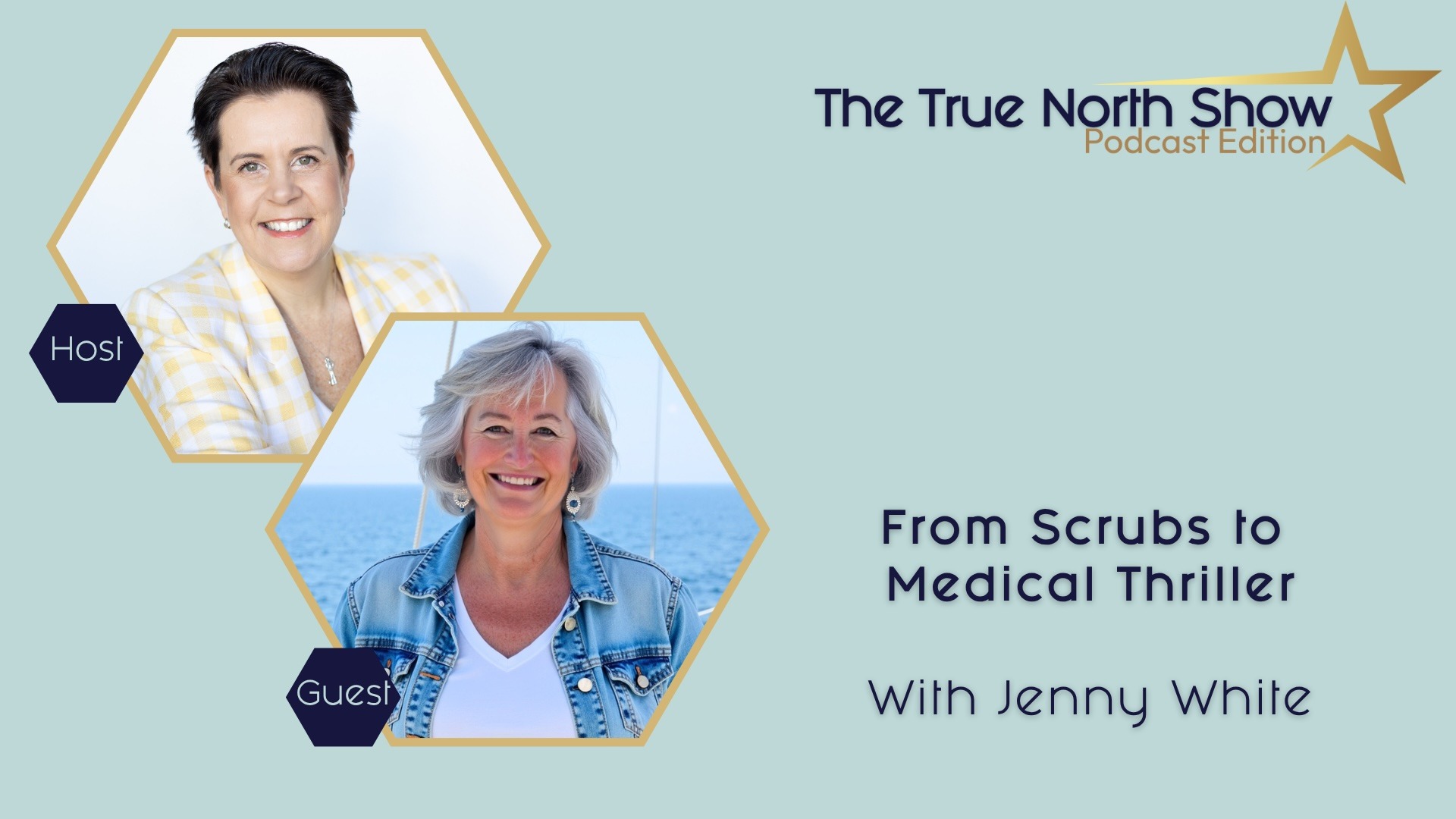
From Scrubs to Medical Thriller with Jenny White | Ep. 51
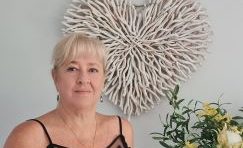
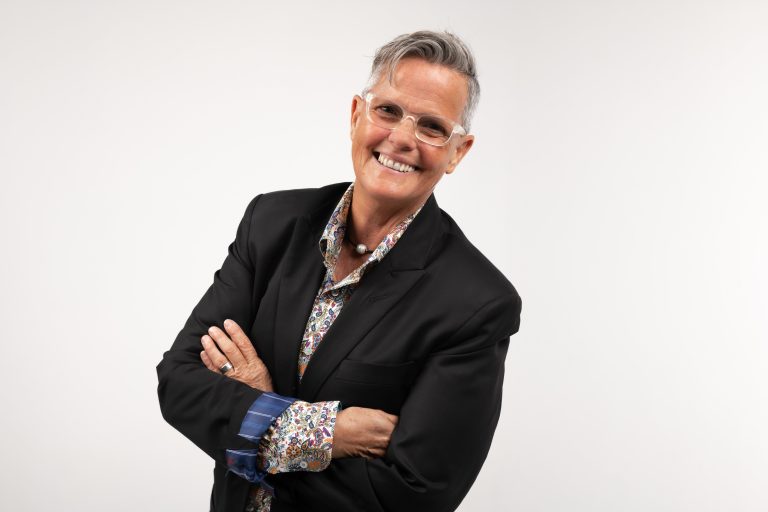
On this week’s episode of The True North Show I am joined by Jenny White, an inspiring woman who has had an incredible journey over the last few years. Through this journey she has had no choice but to reinvent herself and this new version is inspiring, creative and someone she never thought she would be. Jenny and I dive deeply into the circumstances that changed her life forever after her retirement from a 30 year career as a Registered Nurse. Our conversation is wonderful, funny at times and truly remarkable, it is a conversation that will give you a very different perspective on life.
Bio:
Jenny White is a retired Registered Nurse living in Southwestern Ontario. She spent over 30 years working in various settings including hospitals: ICU’s, trauma units, surgical floors, as well as Public Health and Long-Term Care homes (nursing homes).
She has vast experience in these settings working as staff, and finishing her career as a Director of Care, managing large nursing departments as well as a Director of Nursing services for a for profit organization overseeing 7 of their long-term care homes.
Having retired, she discovered that she had a brain tumor wrapped around her carotid artery in her brain, that was life threatening and required specialized surgery. After her extensive surgery, she was comatose for days, and when she awoke, she found herself tied to the bed as she had become a disoriented patient, attempting to remove all of the medical tools keeping her alive.
Her memories were gone, she did not recognize her husband at the bedside, and she had to relearn how to walk and talk.
Over the next year, Jenny had to reinvent herself. Her old hobbies and interests were gone, and she felt vulnerable and lost. That was the turning point. She decided she was interested in writing her story. As she learned the craft of writing by taking online courses during her rehabilitation, a spark was ignited and she began to write. Her returning memories are slow, but are impacted by writing, slowly remerging from the past.
Her experience is vast and she has many stories to tell. She now writes Medical Thrillers. Her debut novel, “The Triggering Scent” (book 1 of a series), Jenny took her experience, and returning memories and created a character of a nurse, working in an ICU.
The Triggering Scent is now published and available on over 40 platforms, purchase your copy using the link below:
https://www.jennywhite.ca/the-triggering-scent
Social Media:
- Website: www.jennywhite.ca
- Facebook: https://facebook.com/authorjennywhite
- Instagram: https://instagram.com/author.jennywhite
- LinkedIn: https://www.linkedin.com/in/jennifer-white-259b36360/
Transcript:
[07:57] Jenny White:
Thanks so much for having me. It is a pleasure to be here.
[08:00] Megan North:
You are very welcome. So Jenny’s journey from director of care to waking up in a hospital bed not recognising her own husband is one of the most remarkable stories of resilience I have ever heard. Do not go anywhere, because after the break, Jenny and I are going to dig deeper into her journey and discover what was on the other side.
Welcome back to the True North Show. I am here with retired nurse, brain tumour survivor, and now debut novelist Jenny White.
Jenny, let’s start right at the beginning. What was the defining moment that led you to pursue your true passion and purpose? And in particular, why nursing?
[09:32] Jenny White:
I actually do remember this one. What really happened is I was on a road trip with my family. I was probably about six or seven at the time. We were driving on an interstate and we came across a very serious collision that had just happened, because people were still trying to get out of their cars. I remember looking out the back window and seeing people covered in blood, wandering around aimlessly, looking for help. Emergency services had not arrived yet.
I remember begging my father, who was driving, to please stop so we could help. He ignored me and kept driving. I watched through the back window as a child, seeing all of that chaos, feeling so helpless. And I remember thinking: I am going to be either a doctor or a nurse, and I am going to stop and help people.
I told my mother at the time, and she kind of laughed and said: well, I don’t think you’re smart enough to be a doctor, but you could probably be a nurse. So as I went through life, I always carried that thought that I was not good enough to be a doctor, but I was good enough to be a nurse. And that is kind of how it all started.
[11:07] Megan North:
And isn’t that interesting in terms of the limiting beliefs that are placed on us when we are young. If your mother had said something different, who knows where you might have gone.
[11:24] Jenny White:
Exactly. And I almost resent what she did, but it was common at the time. This was back in the sixties. Teaching and nursing were the two professions women typically went into, and it was frowned upon to go beyond that scope. In a way, it was what she herself had been programmed to believe, and she simply passed it on to me. In hindsight you see things differently, but at the time it was quite culturally normal.
[12:01] Megan North:
Yes, and as you said, she was not being mean or nasty. It was simply how she was raised. She thought she was saying the right thing.
[12:23] Jenny White:
Right. It was culturally appropriate at the time.
[12:25] Megan North:
Yes, so interesting. And through the journey of nursing, did you often go back to that little girl and think: this is exactly what I wanted to do?
[12:46] Jenny White:
Absolutely. As an adult I would stop at car crashes and at scenes where people needed help, and I was often the first one there. That really fed into the belief that this is what I was meant to do.
[13:05] Megan North:
Wow, really beautiful. So things have obviously changed for you significantly. Can you share the journey you have been on over the last few years?
[13:18] Jenny White:
Yes. As you said, I was enjoying my retirement. We were travelling, having a wonderful time. And one day I just was not feeling well. As a nurse, I knew something was up. I got myself to hospital, thinking I was having a stroke because I had classic stroke symptoms.
They assessed me quickly and did the necessary scans. And they said: the good news is you are not having a stroke, but the bad news is you do have a tumour, it is in a bad spot, and it is going to kill you.
The hospital I was in had done what they could at that point. They put me on anti-seizure medication, took my driver’s licence away immediately, and my husband came to get me. The journey then began because in Ontario, getting seen by a specialist can take time. But being in the medical profession, I knew there was a way to navigate directly to the right person.
I got home and started researching the College of Physicians and Surgeons across Canada for a specialist in my type of tumour. Because of location, this particular tumour was in a very complex part of the brain, so I needed someone with specific expertise. I found several, and together with my husband, we crafted the referrals using the language that would incite interest and get attention.
The first surgeon, in one city, said he would not touch me. He figured I would probably die on the operating table. I did not hold it against him. Surgeons live and die by statistics, and if they believe a patient will not survive, they tend to step back. That was disappointing, but I understood it.
The second surgeon, a couple of days later in another city, was a younger man at the top of his field. He had won significant awards and had a reputation for being a groundbreaker in new techniques. He was willing to take me on, as long as I was willing to accept the risks.
Part of the problem of being a nurse is you know too much. I knew exactly what they were going to do and how they were going to do it. And it was not a pretty picture. But my choice was do nothing and die, or take a chance and possibly die. That decision did not take long.
We signed the consent that day. We went through all of the pre-operative requirements. I was placed on an emergency cancellation list, meaning the first available operating theatre where he was not already in surgery, he would operate on me.
It was only a couple of weeks, but it happened to fall over Christmas. I could not enjoy Christmas with my family because all I could think was: this is probably my last Christmas. The family was struggling too. Instead of singing carols, we were having conversations about what if, and what do you want. I wrote my obituary. Those kinds of things.
My phone was beside me twenty-four hours a day, waiting for the call. Every time it rang, your heart skipped a beat. You were on constant edge. But eventually the call came, the surgery happened, and I was alive. But I was in a coma.
I did not know about the coma until afterward, obviously. When I woke up, I was tied to the bed because I had become the patient from hell. We have a saying that nurses make the worst patients, and I kept that myth alive. I was difficult, and that was mostly because I was so disoriented and confused. My brain was swelling. It made sense, and it did not make sense.
When I woke up, I did not recognise the person at the end of the bed. I could not speak. I thought I was being very clear, but no one could understand me. And when they tried to get me up to walk because I had been in bed too long, I could not do it. Something we take completely for granted, I simply could not do.
That was when I knew things were completely different going forward.
[19:13] Megan North:
And even without your memories, do you think there was some unconscious part of you that understood the seriousness of what was happening? Some thread of your nursing knowledge still present?
[19:38] Jenny White:
Yes. I distinctly remember waking up in my nurse brain. I knew where I was. I recognised the ICU: the smells, the sounds, the equipment. That part of me was not worried at all. But the Jennifer side of my brain had simply gone on vacation. There was nothing there. The nurse in me was concerned about what was happening clinically, but the Jennifer part was gone, and I was not functioning as my old self in any meaningful way.
[20:22] Megan North:
That must have been so confronting on so many levels.
[20:31] Jenny White:
Yes. It was a shock. The nurse in me knew there could very well be significant problems. I was not really sure what I had expected, but I knew there would be challenges. And I just thought: okay, I am in a pickle here. I am going to have to figure something out.
[20:53] Megan North:
And I am curious, as someone who is quite spiritual myself, do you believe that the brain tumour and everything that followed was meant to happen? That it was putting you on a new path?
[21:14] Jenny White:
It is interesting you say that, because one thing I learned through this experience is that my body is just a package, and my spirit is what continued on. The package got fixed, but the spirit was saying: okay, you have got a whole new reset here. Do something different.
When I spoke to the universe and to my God and asked: what was this all about? The message I kept receiving back was: you were not paying attention, and you are not done yet. And I thought: okay. Okay, I can live with that. But you are going to have to help me a little bit here.
[22:06] Megan North:
And looking back, can you identify any nudges that were happening before that moment?
[22:22] Jenny White:
Not specifically, no. It was like I had to get hit over the head with a hammer to get me going in a different direction. Which is really quite interesting.
[22:33] Megan North:
Yes. And I think that often happens, doesn’t it? The universe taps gently on the shoulder, then nudges a bit harder, and if you are still not getting it, something much more dramatic occurs.
[22:52] Jenny White:
Yes, it does seem that way.
[22:55] Megan North:
So what about your husband and your family through all of this? He sounds like an extraordinary man.
[23:28] Jenny White:
He has been great. He has helped me through numerous challenges over the course of our relationship. I feel so bad for him because I broke his heart when I did not recognise him at the bedside. It profoundly changed him. He never stopped caring, he never stopped being there for me. But I know he struggles with a thirty-year marriage that I do not remember.
Bits and pieces come back, but in no particular order. Something will trigger a memory. About a month ago, we went to a family wedding. I recognised the family members in the sense that I knew they were people I should know, but without specific memories of them. I almost had to reintroduce myself to people.
Driving home after the wedding, I realised I could not remember my own wedding. That just broke my heart. My husband and I curled up together and he walked me through it: what I was wearing, who was there, what we ate. It was quite bizarre. It did not trigger any memories, but we had that conversation together.
[25:03] Megan North:
And I would imagine that even without the specific memories, energetically you would begin to feel the familiarity of the people around you. That sense of: this person feels right, I am going to lean in.
[25:31] Jenny White:
Yes. And I end up doing a lot of faking. I cannot remember names. So I start a conversation as if everything is fine, pick up on the clues of what the other person says, and try to piece together who they are and what our connection was. It is scary and unnerving and it makes you feel very vulnerable.
[26:01] Megan North:
It is almost like you are living inside a real-life mystery novel.
[26:09] Jenny White:
Yes, it is. And you never quite know what is coming next.
[26:15] Megan North:
And your husband, it sounds like you are actually navigating the relationship together in a really conscious and intentional way.
[26:30] Jenny White:
Yes. Because my personality has changed somewhat as well, we are still navigating everything. We basically started from scratch. We came to the conclusion that we had a choice: we could go our separate ways, because what originally brought us together is no longer there in the same way, or we could try again, starting fresh. So we started dating. Starting fresh, getting to know each other again.
That is fine for me. I think it is taking more of a toll on him because he carries the memories of what was. But we are still together, still trying. We are getting therapy, taking it one day at a time.
[27:19] Megan North:
Yes, I love that. After a long time together, many couples say they should start dating again. You are actually doing it. And from a mental health and wellbeing point of view, has that aspect of your life changed significantly since the surgery?
[28:03] Jenny White:
Yes, definitely different. Because of the brain surgery, I do have some depression, which I have had to learn to navigate with medication and support. I also have challenges with speech some days. Today is a pretty good day, I am talking fairly normally. But there are days when my words are mixed up or my thoughts are scrambled.
In terms of mental health, I think I am getting a sense of self-esteem and purpose from my writing right now, because it is something tangible and concrete and new. Taking the online courses, learning new things, I believe that helped rewire my brain to some degree.
When I was working with my speech pathologist, he suggested that since we were still struggling to get me to produce spoken words reliably, I should try writing things down. And what I put on paper made sense. The words I wrote were the words I intended. So that was how I began to communicate with people while we were still working on getting my speech back.
That was incredibly frustrating, because as a nurse, you talk for a living. You are talking to patients, families, colleagues, and staff constantly. And when you cannot share what you are thinking or what you need, it is an enormously limiting and frustrating experience.
[30:03] Megan North:
Yes. And I would imagine that for you now, mental health is partly just the basics: enough rest, fresh air, time alone, time with others.
[30:26] Jenny White:
Yes. I have definitely focused on self-care. When I am tired, I lie down and I might sleep for three hours. I try to get outside every day. I live on a beautiful property with land to walk on and birds and rabbits, and I find that very healing.
My mental health has certainly taken a hit, there is no doubt about that. Anyone who had lost their memories and said they were not dumbfounded and traumatised by it would not be telling the truth. I have never experienced anything like this before, and it has been a profound journey. Really quite profound.
[31:31] Megan North:
Yes. And I think it is worth saying that a lot of people get overwhelmed by the idea that looking after your mental health requires big formal practices. But sometimes just sitting quietly in the sun for five minutes, or having a nap, or putting your feet on the ground, is genuinely the most valuable thing you can do.
[32:05] Jenny White:
Absolutely. When I realised I had a clean slate and could genuinely do anything, I gave myself permission to dream like a kid. Kids make up adventures, they create stories, they imagine what they want to be when they grow up. I thought: I have a complete clean slate here. What actually appeals to me?
When I was able to start writing, it was very simple at first. Writing a single sentence felt like a major accomplishment. But I thought: this is probably what I should be focusing on, because I had no interest in writing before any of this. Something in my brain had been turned off, and something else had been turned on. Clearly, this was the path.
[33:10] Megan North:
Wow. And you must think, even with your nurse’s brain, how extraordinary this is to be experiencing.
[33:25] Jenny White:
Yes. It is very hard to explain to people. And the other thing I want to share is that I look fairly normal. But there is still a lot going on inside that is not yet healed. When people say: you look great, you have recovered so well. Well, thank you, but not quite.
My children, for example. I do not remember their childhoods. So when I talk to them now, I talk to them friend to friend, rather than parent to child. It is a very different dynamic, and they have noticed and commented on it. One of my boys visited recently and I could not remember what vegetables he liked. He looked at me and said: Mum, you should know this. I had to say: I am sorry, you are going to have to walk me through it again.
[35:17] Megan North:
And I imagine people saying you look well is partly because going deeper feels too confronting or too hard to comprehend.
[35:17] Jenny White:
Yes. You go down a black hole. But I try to stay positive. Every day I find something I have been successful at. Some days are good and some are not. I accept that, I acknowledge it. And as long as I do not give up, I think I will be okay.
[35:36] Megan North:
Yes. That mindset of waking up and deciding. And finding those small daily wins, not taking them for granted.
[36:12] Jenny White:
Absolutely. And one of the reasons I want to share my story is not for people to feel sorry for me. There is no need for that. It is more to share that change is possible, that reinvention is possible, and that we actually have more control in our lives than we tend to think. When you are offered a clean slate and can do anything and give back any way that you want, you have to be grateful that you are alive, that you have the opportunity and the skills to figure it out.
My mind is still working. That is a good thing. I do not take that for granted. I am blessed to wake up every day, and I tell the universe: thank you for another day. Let us make it a great one.
[37:22] Megan North:
Beautiful. And what about grounding practices? Things you do when you need to bring yourself back to earth?
[37:37] Jenny White:
I practice gratitude every day. During my recovery, when I had a lot of time and my brain was functional enough to read and explore, I looked into quite a lot of things. I read books on empowerment and the laws of the universe. That is where I really came to internalise the idea that I am a spiritual being having a human experience, and that the universe can help me do whatever I want.
So every morning I list a few things I am grateful for. In my previous life I took that for granted, I think. But I have found it genuinely helpful now. And I make sure I am sitting by a window with a beautiful view, watching the birds and the trees and just taking in the simple things, which really are miracles in themselves.
[38:52] Megan North:
Yes. When you come back to gratitude for the basics, a roof overhead, family around you, that is actually the most important foundation.
So let us talk about the book. The Triggering Scent. I would have imagined most people in your situation would write an autobiography. Why a medical thriller?
[39:45] Jenny White:
You will laugh because it did start as something like an autobiography. I showed the first couple of chapters to my husband and he said: nobody wants to read this. So I did that more to explore and express my feelings. It was part of the healing journey. But I took the note and went back to learning the craft.
I took online courses to understand fiction, because I had only ever written academic papers, which are completely different. That helped. And as I was going through that, I was thinking: they tell you to write what you know. What do I know? I have thirty-plus years as a nurse. And I know what it is like to be a brain tumour patient. So that is what I am going to write about.
I created a character who is a nurse in her thirties. I am in my sixties, so a little different there. I gave her a brain tumour and surgery. Her outcomes were not as good as mine, but she shared some of the same characteristics: memory loss, not recognising people, speech difficulties. I then had her go back to work after about a year, into an ICU environment.
I loved working in an ICU. You had to know what you were doing. You needed extra education. You had to be on top of your game at all times. It was fast-paced, stressful, and complex. But I loved it because it was a challenge.
Now, one thing I noticed after my surgery was that my sense of smell had become much more acute. I could smell something being cooked and not be able to name it, but I knew it was something I liked. So I took that experience and created a scenario where my protagonist smells something that triggers a memory. And that memory leads her to realise that the scent belongs to the neurosurgeon who was responsible for her surgical complications.
The conflict arises because she realises he has now transferred to her hospital. She had her surgery in a different city. He is now working beside her. And she faces an ethical dilemma: how does she stop him from hurting other people, and is she willing to risk her nursing licence to do it? That is where the book comes together as a medical thriller.
[43:09] Megan North:
Incredible. And this is book one of a series?
[43:24] Jenny White:
Yes. The plan is to move the character through different healthcare environments. In book one she is in an ICU. She eventually realises she is putting her patients at risk and should not be nursing there, so she moves into administration and runs a nursing department in a long-term care home. I have that history too, so I took the stories that came back to me and wove them into the book. It is real life, and fantasy, and a bit of horror, all wrapped up into what could possibly go wrong in a nursing home.
[44:18] Megan North:
And book two, is that close to publishing?
[44:18] Jenny White:
I just signed off on it. It is going into pre-production and should be out towards the end of summer.
[44:29] Megan North:
Fantastic. And I imagine you have a wealth of material to draw from, both from your own experience and from stories others have shared with you.
[44:51] Jenny White:
Potentially a lot of material, yes. As long as I am having fun, I will keep going. I am not going to win any prizes, but I am doing it to entertain and to raise some real issues about what is happening in healthcare right now. Regardless of what country you are in, the challenges are similar: budget pressures, staffing shortages, burnout, workplace violence. All of those threads are woven into the books to give them realism, but also to prompt readers to think: I did not know that was happening. Maybe we should do something about it.
[45:42] Megan North:
Yes. The writing has so many dimensions for you, doesn’t it? It is helping your memory, it is giving you purpose and fun, it is a healing journey, and it is also a way of inspiring people and broadening perspectives.
[46:12] Jenny White:
Yes. And I would also like to branch out into inspirational speaking, because I look at myself as a pretty good example of going from coma to published author. How does that happen? And how can that impact other people? I am certainly willing to share the story, the pain, the journey, the accomplishments, and the strategies I have used.
I also have this belief that if I make a bit more, I can give a bit more. There is that balance.
[46:51] Megan North:
That is really beautiful. What have you learned about yourself through writing and publishing your first book?
[47:01] Jenny White:
I have learned I do not have a lot of patience, which is actually the opposite of how I used to be. I like things to happen quickly, and the publishing world simply does not work that way. It can feel like everything moves at a snail’s pace, and I am constantly asking: what is next?
But overall, I am proud of the courage it has taken to try something so far outside my previous experience. To be willing to put myself out there. There will be people who do not like what I do, and that is fine. I am here for a purpose.
The children’s books I write are to help children learn to read and to bond with parents and caregivers. That feels significant. And the novels are a way of sharing fun, of entertaining people. Fiction, ultimately, is about entertainment. And I think people will find these books genuinely entertaining.
[48:08] Megan North:
Yes. And I imagine all of your guides and angels celebrating the fact that you are finally on this path, having fun, and being grateful.
[48:37] Jenny White:
You know, I do realise it took a team to keep me going. It was clearly way beyond my own capacity. Even with a brilliant surgeon and an extraordinary team, they were fixing the package. It was my spirit that came alive after this. I think you are right, I think whoever is looking after me had a plan and felt I had more to offer. So they put me on a path I was not expecting or particularly wanting. But I came out the other side and I think I am a better person for it.
[49:20] Megan North:
Really beautiful. And you mentioned the children’s books, can you tell us about those as well?
[49:32] Jenny White:
Yes. I actually started with the children’s books. When I was lying in bed creating stories in my head, my little dog Molson was beside me. I thought: if I were five, I would be going out and playing with Molson and coming up with an adventure.
I could not remember my own childhood, so I thought: what would a five-year-old do? Let’s go to the zoo. And then I started thinking about what animals would be in the zoo, and nothing came to me. So I went online and put in the word zoo, and all the pictures of animals came up. And I am looking at them going: okay, that might be an elephant. Then I would look down and confirm: yes, elephant, lion. So I literally reprogrammed myself through a combination of imagination and straightforward facts.
I created and trademarked the Molson and Jenny Adventure series. Because I am in Canada, I wrote twelve books in both English and French so they can reach both sets of schools. They are designed for children aged six to eight to help get them reading.
[51:02] Megan North:
Incredible. You will have to add Australia to your travel list and visit Taronga Zoo here in Sydney. It is one of the most beautiful zoos in the world, with the most extraordinary views.
[51:21] Jenny White:
Australia and New Zealand are definitely on the list.
[51:24] Megan North:
Wonderful. Make sure you let me know when you are coming. So we only have a couple of minutes left. The same question I love to ask all of my guests: what is one lesson or truth that you have learned on your journey that you wish you had known earlier?
[52:07] Jenny White:
I would say it is okay to challenge the paradigms we are taught.
As a society, we are kind of taught that the dreaming starts and stops around kindergarten. Because then you have to learn your ABCs and your numbers and focus on the right things. As you move through school, the ability to dream and create adventures gradually leaves you, because you are told to focus on what matters, to work toward a goal, to pick a path and stay on it.
I think it is okay to step back from all of that and say: I do not care what anybody else thinks. What is going to work for me?
[53:13] Megan North:
And that ties back so beautifully to the very beginning of our conversation, where your mother told you that you probably were not smart enough to be a doctor. It connects the whole thread of what we have talked about today.
[53:32] Jenny White:
Absolutely.
[53:33] Megan North:
Really beautiful. Thank you so much for spending this time with me today, Jenny. Your story is incredible and I feel truly blessed to have sat with you and heard you speak. Thank you very much.
[53:51] Jenny White:
You are very welcome. Thank you for the opportunity. I hope this reaches people who are struggling, so they know there is light at the end of the tunnel and you can do anything you want to.
[54:02] Megan North:
Absolutely. Thank you. And I would also like to thank all of my amazing and dedicated audience, supporters, and sponsors. I hope everyone has a wonderful rest of the week and I look forward to seeing you all again next week. Thank you again, Jenny.
[54:19] Jenny White:
You are welcome.
![True North Show [podcast] - Season 2, Ep 9 - Jay Kattel](https://megannorth.com/wp-content/uploads/2025/10/True-North-Show-podcast-Season-2-Ep-9-Jay-Kattel-1-768x432.png)